 If you’ve ever found yourself drawn into a minute-long video demonstrating how to perfect a pancake flip, or got inspired by a 15-second TikTok recipe to recreate a gourmet dish, you’ve already tasted the enticing world of social media Chefs!
While the global lockdown had us hemmed into our homes, our screens were flooded with a deluge of culinary content. Social media platforms, particularly Instagram and TikTok, witnessed a dramatic surge in food-related short-form videos. Unable to frequent our favourite dining spots, many of us turned to these platforms, eager to bring the restaurant experience home.
Interestingly, a survey mentioned by The Independent in 2020 stated that over 70% of adults found themselves swapping traditional cookbooks for social media recipes. The rise of this trend has certainly blurred the lines between your traditional Hospitality industry and the growing community of online food influencers.

Speaking of the Hospitality industry, we can’t forget the traditional Chefs working tirelessly behind the scenes in bustling restaurant kitchens, pubs, and hotels. This is the other side of the culinary world – a whirl of fast-paced services, high pressure, and the relentless pursuit of perfection.
The pandemic was tough for this sector, with the UK experiencing a staggering 660,000 job losses in 2020. Amid the turmoil, many professional Chefs like Poppy O’Toole (a.k.a. @poppy_cooks, or the ‘Potato Queen’) embraced social media platforms to continue sharing their skills.
But let’s delve a bit deeper. Why do we find ourselves getting drawn to the short videos of social media Chefs rather than tuning in to traditional cooking shows on the telly? Could it be the easy accessibility and intimacy of learning through our smartphones? Or perhaps it’s the on-demand culture that we’ve grown accustomed to that allows us to consume content at our own pace.
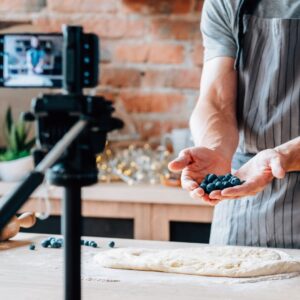 Social media has certainly levelled the playing field for content creators, opening up a space where anyone can showcase their culinary talents. It’s a platform where simplicity, authenticity, and creativity reign supreme, rather than the high-stakes pressure often seen in professional kitchens. And it’s not just about recreating recipes – it’s about connecting with the creators, their stories, and their unique styles.
But, while the rise of social media Chefs has been meteoric, let’s not overlook the struggles and resilience of traditional Chefs. Their grit, their dedication, their deep knowledge – these are aspects that are hard to capture within the confines of a short-form video. A professional kitchen isn’t just about the heat and the pressure; it’s also a place of mentorship, camaraderie, and personal growth.
In a nutshell, there’s no “one-size-fits-all” in the culinary world. Both social media Chefs and traditional Chefs bring something unique to the table, and there’s a lot we can learn from each sphere.