
By Colin Macintyre, Managing Director
The continuously evolving retail industry had always been fascinating, notably the growth of hospitality within retail – a perfect marriage that has reshaped consumer experiences significantly. Today, let’s embark on a culinary journey, tracing the origins of food halls and eateries in retail to their contemporary prominence in the sector.
 Before the emergence of food courts in American malls, the concept of food halls found its roots in ancient times. Trajan’s Market, an arcade-like shopping structure of the second century, and the Grand Bazaar in Istanbul, established in 1461, stand as testaments to the longstanding tradition of combining food and shopping. In the United States, markets like Quincy Market (1825), Reading Terminal Market (1893), and Pike’s Place in Seattle (1907) have long intertwined retail with food.
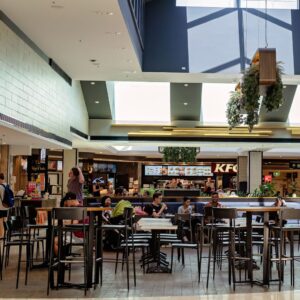
The pivotal moment in the evolution of the modern food hall was the opening of Eataly in an old vermouth factory outside Torino, Italy, in 2007. The model of a single-purveyor food hall, carefully selecting vendors to provide unique, quality, chef-driven products, sparked a new trend. By 2017, there was a 700% increase in the number of food halls in the United States. These establishments appeal to today’s young generations, catering to their taste for diverse, globally-inspired cuisine while offering a place to socialize and savour a meal or drink.
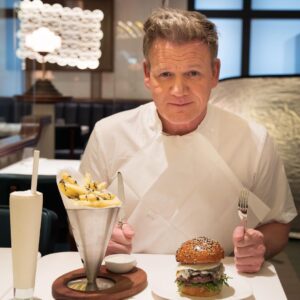 One venue that exemplifies this trend perfectly is Harrods. Founded in 1849 by Charles Henry Harrod as a humble grocery store, Harrods has become synonymous with luxury and variety, living up to its Latin motto “Omnia Omnibus Ubique”, meaning “all things for all people, everywhere”. Today, Harrods boasts an astounding selection of eateries, from the Angelo Musa Café and Baccarat Bar to the Caviar House & Prunier and the renowned Gordon Ramsay Burger. This evolution marks a stark contrast to its modest origins, reflecting the progression of retail and hospitality in tandem.
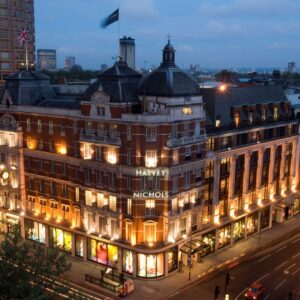
Similarly, Harvey Nichols, a luxury department store chain founded in 1831, has also incorporated hospitality into its business model. Their eateries, such as the Fourth Floor Brasserie and Bar in Leeds, the Fifth Floor Café and Terrace in London, and the Dining Second Floor in Bristol, have become destinations in their own right, enhancing the overall retail experience.
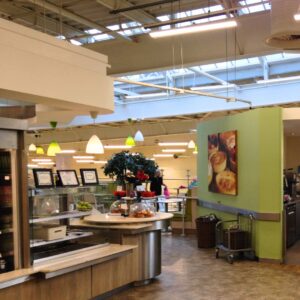
But it’s not just luxury department stores that have embraced hospitality. Mainstream retailers like Marks & Spencer and Tesco have also added food services, with cafes now an integral part of their customer offering. Marks & Spencer, the largest retailer in the United Kingdom, currently operates 350 cafes across the country. Tesco, the leading grocery retailer in the UK, also hosts cafes in their stores, offering breakfast, lunch, salads, light bites, and more.
In conclusion, the fusion of hospitality and retail has revolutionized the way we shop and dine. From humble beginnings in ancient marketplaces to the luxurious eateries of Harrods and beyond, the journey has been remarkable. It’s a testament to the adaptability and creativity of the retail and Hospitality sectors, continually finding new ways to enhance customer experiences. As the landscape continues to evolve, who knows what enticing culinary delights the future of retail might bring? For now, let’s savour the variety and abundance the present offers.