
Michelin Guide UK

Michelin Guide UK 2022: Latest additions, April 2022

A further five restaurants have been added to the Michelin Guide for Great Britain and Ireland this month

After publishing The Michelin Guide for Great Britain and Ireland 2022 in February, the guide also announced five additions to its digital guide last month – Library Street in Dublin; Magenta in London, headed by Italian chef Manuele Bazzoni; Hyssop in Glossop; Nigel Haworth’s recently repurchased pub, The Three Fishes in Mitton; and Bisushima, the Japanese restaurant located in Page8’s Hotel in London.

The tyre company introduced monthly releases last year, but will only list restaurants worthy of a visit between publishing its annual guide: stars, Bib Gourmands and Green stars will continue to be announced annually.

As of this month, the following five restaurants will be listed in the Michelin Guide:

Barnacle, Liverpool

Spearheaded by The Art School chef patron Paul Askew, the Duke Street Market restaurant is led by head chef Harry Marquart, serving modern dishes that pay tribute to the port city made using local, organic, free-range ingredients.

Heritage, Dulwich, London

Father and son Dayashankar and Anmol Sharma run this neighbourhood Indian restaurant in the affluent South East London area of Dulwich.

Dayashankar, who worked at Imli in Mayfair, Zaika of Kensington, consulted for Lord’s Cricket Ground and is the chef behind Grand Trunk Road in South Woodford and delivery concept Jhakaas, was named London’s best Indian Chef 2021 by the The Asian Catering Federation. Meanwhile, Heritage scooped the prize for London’s Best Newcomer of the year.

Upon visiting Heritage in August last year, The Guardian food critic Grace Dent said that despite the restaurant’s bumpy start in the middle of the pandemic, “by rights it should become a south London classic.”
The Gunroom, Bontnewydd

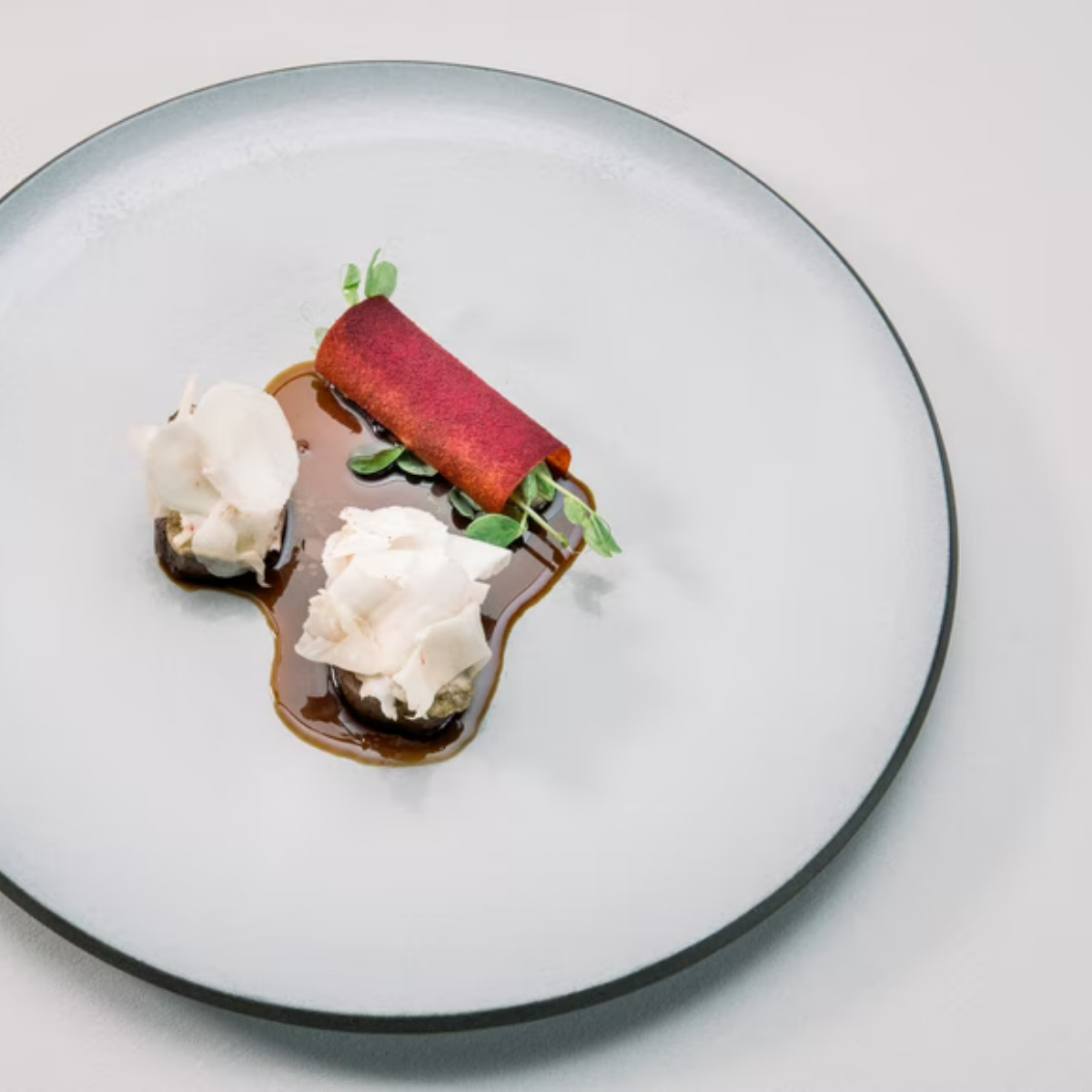
Lord Snowdon’s former home, The Gunroom is located in Plas Dinas Country House, a 17th century ten-room, five star hotel in the heart of The Snowdonia National Park.

Chef Daniel Ap Geraint serves a modern take on country house dishes and afternoon tea, all using high-quality seasonal Welsh produce.

The Old Couch Café, Waterford

One of Ireland’s oldest cities, Waterford, is home to Damira Levacic and Przemyslaw Muszynski’s restaurant, The Old Couch Café, where the Croatian-Polish couple serve dishes that fuse their heritage with the southeastern region’s local produce, creating what Michelin says is “an original 10 course menu with a choice of two starters, mains and desserts; the latter being a highlight,” adding that “their signature mead cocktails are also not be missed.”

Zahter, London

Zahter is a high-end Turkish restaurant set between The Photographer’s Gallery and Kingly Court, just off from London’s Carbaby Street.

It is led by chef Esra Muslu, who trained in Australia and ran a series of restaurants in Istanbul before taking on the role of head chef at Soho House, first in the city, then in Shoreditch. She then moved on to Ottolenghi in Spitalfields before launching her first solo venture with Zahter.

The restaurant’s baklava has been spotlighted by critics and social media followers alike, while Michelin lauds its oven-fresh breads; hot and cold mezze which come served on large platters ideal for sharing, and its breakfasts.

Source: thestaffcanteen.com

The Burnt Chef Project

The Burnt Chef Project gets hospitality professionals active across the globe in moving for mental health fundraiser

The Burnt Chef Project has launched a global active challenge, which aims to get hospitality professionals from around the world exercising and creating healthy habits by focusing on exercise.

The fundraising initiative will run from Monday 9th May – Sunday 22nd May 2022, coinciding with Mental Health Awareness Week and will see hospitality teams of up to five people per team compete against each other to climb the highest virtual mountain by achieving the most active minutes.
Teaming up with virtual challenge hosts – Magic Mountain, the fundraiser looks to get international teams competing with each other to connect and inspire a sense of community within the workplace whilst benefiting participants’ mental health through exercise.
 Studies show that exercise can treat mild to moderate depression as effectively as antidepressant medication. A recent study by the Harvard T.H. Chan School of Public Health found that running for 15 minutes a day or walking for an hour reduces the risk of major depression by 26%. In addition to relieving depression symptoms, research also shows that maintaining an exercise schedule can prevent relapse.
The challenge entry fee is £20/ person with all monies raised goes towards The Burnt Chef Projects ongoing development of a free-to-access bank of ten modules designed to support catering & hospitality students in building personal coping mechanisms and resilience skill sets as well as funding new modules for the internationally available Burnt Chef Academy app.
Kris Hall, Founder of The Burnt Chef project said “People who exercise regularly tend to do so because it gives them an enormous sense of wellbeing. They feel more energetic throughout the day, sleep better at night, have sharper memories, and feel more relaxed and positive about themselves and their lives. And it’s also a powerful medicine for many common mental health challenges. Regular exercise can have a profoundly positive impact on depression, anxiety, and ADHD. It relieves stress, improves memory, helps you sleep better, and boosts your overall mood. And you don’t have to be a fitness fanatic to reap the benefits. Research indicates that modest amounts of exercise can make a real difference. No matter your age or fitness level, you can learn to use exercise as a powerful tool to deal with mental health problems, improve your energy and outlook, and get more out of life. What better time to start implementing healthy habits to benefit our mental health than Mental Health Awareness week. Our two week challenge is designed to get people committed to exercise by showing them it doesn’t have to be intense gym sessions every day – just getting active is enough to boost your mood”.
Magic Mountain’s CEO, Katy Brown, said “We are absolutely thrilled to partner with The Burnt Chef Project. Our team movement challenges are designed to make movement fun, and in doing so, support our physical, mental and social wellbeing. We give everyone the motivation they need to step away from their screen, take a break from work and move in any way that works for them. It’s not about being an athlete, running marathons or climbing literal mountains. It’s about doing a walking meeting rather than a Zoom, cycling to the shops instead of driving or booking that yoga class you’ve been wanting to try. Most importantly, any movement counts – whoever you are and however you like to move. Magic Mountain is for everyone, regardless of age, ability or fitness level. You don’t need any kind of fitness tracker to take part (though it does sync with them seamlessly), you just need to join a team and get moving as much, or as little, as you like.”
Source: thestaffcanteen.com

Front of house workers

National Living Wage rise boosts salaries of front-of-house workers

Front-of-house hospitality staff are one of the biggest beneficiaries of the increase in the National Living Wage (NLW), with average pay rising to be more in line with back-of-house roles.

According to data from hospitality software provider Fourth, front-of-house restaurant workers aged 21-22 have seen their hourly wage rise by an average of 6.7%.

Instead of £8.60 per hour, the average rate of pay recorded in March 2022, this cohort will now earn at least £9.18 because of the rise.

Their pub-working counterparts had been earning an average of £8.87 prior the increase in NLW, which came into force on 1 April, marking a 3.5% rise in comparison.

This contrasts with the overall trend in the hospitality industry, which has seen the wages of pub workers rise faster than those in restaurants over the past 12 months. During this time, the rate of pay for all pub workers has risen by 4.9%, as opposed to 2.9% among restaurant workers.

Data from Fourth, who analysed more than 700 companies across the hospitality industry, also showed that back-of-house workers from both sectors will be less impacted by the NLW rise.

However, figures indicate that back-of-house pay has risen significantly over the past year due to the ongoing recruitment crisis. Pub kitchen workers have already seen a 6.8% pay rise, with some being paid £10.05 an hour before NLW rates were raised to £9.50, while back-of-house restaurant workers have experienced a 3.7% increase.

The NLW move is set to balance the discrepancy in pay between front-of-house and back-of-house workers in both hospitality sectors, though in many businesses front-of-house workers may receive a greater proportion of customer tips.

It raises concerns for businesses, who will be the ones paying the difference.

Fourth’s data also showed that the number of hours worked by hospitality staff in March 2022 was 12% higher than that of the previous month. This is still 12% lower than the hours recorded before the pandemic.

Sebastian Sepierre, managing director – EMEA at Fourth, said: “As the hospitality industry continues on the road to recovery, it is evident that major obstacles still stand in the way. The Government’s decision to go ahead with the VAT increase from 12.5% to 20% has been met with disdain and the increase in the NLW rate, while good for workers, is set to put even more pressure on already squeezed margins.

“The sector still requires as much support as it can get, in the face of the cost-of-living crisis for consumers and soaring operating costs for businesses – the VAT hike, in particular, couldn’t come at a worse time and will force businesses to regrettably increase menu prices.”

Source: thecaterer.com

UK – Hospitality Sector Boosts Perks and Pay After Losing 93,000 EU Workers Last Year

Over 93,000 EU workers left the UK’s hospitality sector in the last year, according to a report from Caterer.com.

The net loss of 93,000 EU workers suggested a shift in the industry’s workforce since the pandemic and Brexit.

The report found that some areas are likely to be particularly affected by this loss, with reports suggesting that the percentage of EU workers pre pandemic was as high as 75% in London.

Caterer.com analysed thousands of vacancies and applications as well as gathering the views of 250 hospitality employers and 2,0000 consumers. The study also highlighted how the industry has adapted and boosted company benefits to attract different talent after the steep rise in available jobs since the reopening of the sector.

Vacancies on Caterer.com have grown by 342% since the re-opening of hospitality (comparing July 2021 to March 2021) as employers rushed to rebuild their teams for reopening and this need has continued to climb with over 28,179 roles currently available on the site.
Caterer.com ‘s report found that 90% of hospitality employers pay above the living wage and, in response to shifting demands from the labour market, 58% of hospitality employers have increased their benefits package in the last year. Other pay and work-life benefits currently offered by the vast majority of hospitality employers include bonuses (80%), personal development programmes (81%), flexible shift patterns (83%) and free meals (77%).

As the industry adapts to attract new talent, 60% of hospitality employers say they are now getting more applications from UK workers than ever before.

In a reverse of last year when many workers took on temporary jobs in other sectors during forced closures, 67% of employers are seeing staff who left the hospitality industry during lockdown, now return from other sectors and over half (56%) have hired new staff from other sectors in the last three months.

Kathy Dyball, Director at Caterer.com commented: “It’s encouraging to see more UK workers entering the industry as people see the valuable, long-term employment opportunities hospitality can offer. However, talented EU workers remain an essential part of the sector’s success and we join the industry in calling for the government to urgently make it easier for hospitality talent to return to the UK.

“The staff shortages the sector has been grappling with have only been exacerbated by recent ‘pingdemic’ and staff being taken out of work at no notice. Yet again this is a case of the sector needing more attention from the government to be able to trade profitably,” Dyball said.

Source: Staffing Industry Analysts

Michelin Guide UK 2021: ‘We firmly condemn all acts of aggression and harassment in the kitchen or outside it’

The Michelin Guide for UK and Ireland has spoken up for the first time since calls were made for accolades to be taken away from restaurants where staff are mistreated, condemning “all acts of aggression and harassment” but declining to pursue the suggestion further unless a restaurant has been legally charged for its actions.

After it surfaced that The Kitchin Group had made two senior members of staff redundant following allegations of abuse and harassment, chef’s union Unichef demanded that Michelin-starred restaurants be stripped of their awards if such allegations were confirmed for any restaurant, receiving the backing of prominent voices in the industry, including Darjeeling Express’ Asma Khan.

Whilst the guide, much coveted by chefs around the world, has always been firm in its affirmation that it only assesses restaurants based on the quality of their food, many have questioned whether it should turn a blind eye to the conditions in which the food is created.

The statement reads: “One of the Michelin Group’s five core values is Respect for People, and we take that very seriously. We firmly condemn all acts of aggression and harassment in the kitchen or outside it, which damage people’s lives, the entire profession, and its image.

“The Michelin Star is awarded for the quality and consistency of the food offered to customers. That is where our independent expertise lies. Our core focus and the way we work, based on anonymous visits as a normal diner, do not allow us to form a view of the culture and human resources approach of thousands of individual businesses. As such we must assume innocence until proven otherwise by legal authorities.”

Chef Tom Kitchin has confirmed that he was hiring an independent HR consultancy firm to investigate the allegations made against his staff.

Sodexo CEO: “Wellbeing is the key to bridging hospitality’s recruitment gap.”

Indoor dining and hospitality returning marks a huge milestone in the UK’s post-lockdown roadmap but as we make our way towards 21st June, the hospitality industry needs to reinforce its commitment to its people in order to fully reap its rewards.

People should be at the heart of any good business model but it’s now more important than ever for the hospitality industry. According to the latest data from Office for National Statistics (ONS), a staggering 355,000 hospitality jobs were lost during the pandemic.

Alongside this, figures suggest that more than one in 10 UK hospitality workers left the industry last year due to factors such as prolonged furlough, second jobs or career changes brought on by the continued uncertainty and instability of the industry post-pandemic.

It’s also worth noting that prior to the pandemic, European nationals made up almost a third of hospitality workers outside London. The pandemic, coupled with Brexit, means that an estimated quarter of those workers will not return to the industry.

As a result, the number of unfilled roles has recently rocketed. As of April, Caterer.com said that the number of vacancies on its website had grown by more than 85% in just a few weeks, with 22,000 roles now being advertised. Whereas job site Indeed announced that hourly pay for food preparation and service jobs had risen recently in an attempt to attract people to the industry.

For many bars, restaurants and catering companies, this will mean not being able to return to full capacity at a time when consumer demand is at a peak. Following the various lockdown periods, the industry is at a critical point where it’s focussing on financial recovery but people shortages will no doubt impede these plans.

There’s a lot of work to be done to tackle the recruitment gap and, while pay is a good starting point, career progression, training and mental health safeguarding need to be at the forefront of human resources to attract and retain talent. In a post-pandemic landscape, job security and progression are non-negotiables for many workers, especially those in service roles.

Upon returning to work, many employees will have additional pressures to police and enforce safety regulations such as limited time slots, social distancing and group sizes alongside their previous responsibilities, which could exacerbate mental health problems.
With hospitality being hit the hardest, many had to deal with unprecedented financial issues and loneliness during the pandemic, which is why the importance of mental health safeguarding and training cannot be understated. Ultimately, our industry needs the right support for workers, while providing new routes into the industry to effectively bounce back to pre-Covid levels of success.

At Sodexo, we recognise these challenges, which is why our main focus is on recruitment and retention of talent. As one of the largest hospitality employers in the UK, employing around 29,000 people, we were hesitant to make snap decisions at the beginning of the pandemic.

In the face of uncertainty, we took a redeploy-first approach which saw around 45% of our workforce in the Sports & Leisure division work in Covid-19 test centres to support our country’s efforts in the fight against the virus or into other segments of the business. We put our people first and did everything we could to secure stable employment.

Now that our workers are returning to their previous roles, we have a strict and thorough training programme in place to ensure the physical and mental safety of both our team members and the guests that choose to dine with us or visit one of our many cultural destinations.

Alongside this, we have created a number of roles as part of the Government’s Kickstart Scheme, which aims to create new job placements for young people between the ages of 16 – 25 on either Universal Credit or at risk of long-term unemployment.
The road to recovery will no doubt be a long one but if hospitality businesses continue to put the wellbeing of their people first, there will be light at the end of the tunnel. With Government initiatives as well as organisations like UKHospitality to provide additional support, we’re confident that hospitality will soon be back at its peak.

Source: Hospitality and Catering News

Pilates for Stress Awareness Month

I have been doing Pilates for around 2 years. I started due to problems with my back but soon realised how good it made me feel mentally.

I had always worked long hours, 12-hour days, working from the sunbed on holiday, ignoring my children when they were talking to me, to answer an email on my phone. I think most people who run their own business work this way until something, maybe an incident or event stops them. There is no switch off button if you have a smart phone, it’s always with you.

I ended up having 6 months off work due to a medical issue, this is when I found Pilates. I joined 2 classes, Charlotte Hopkins & Elaine Simpson. Pilate’s changed my life, I learnt how to relax and meditate, not very well, but it was a start. I loved how it made me feel, physically as well as mentally. I’m now in the best shape and place I’ve been in for a very long time, this is a mixture of having a supportive family, colleagues who support me every step of the way and a good work-life-balance.

I’m still happy to work long hours, I’ve always been a “grafter”, but due to covid it’s not been needed, the recruitment industry has been hit hard. We’re now coming out the other side as we specialise in Science and Hospitality, two booming markets.

Each month we do a team activity, the team pick the challenges, we’ve had walking, running, bake off and I chose Pilates. We got our mats down in the office and did Jo Tuffrey classes three times a week. It was great fun. We all really enjoyed it (some were better than others 😉) and I’m sure we will do it again in the summer, maybe on the fields at our gorgeous offices at Manor Court. It certainly makes a difference to how you start your day… motivated and full of energy.

Here’s to the next challenge!!!

P.S Pilates is for men too… I noticed our Ginger Gents did not join us for this particular challenge, you don’t have to wear lycra!

What was our #MarchMiles challenge all about?

I started the March Miles challenge for a few reasons. We’ve gained a few new members of staff here at Ginger and I know it can be very daunting coming into a new business, so I thought this would be an easy way to create conversation. Another reason for the challenge was to promote fitness. With lockdown leaving everybody stuck on their couches and potentially feeling a bit down about life, just a simple walk for 15 minutes or a quick run can make you feel much brighter and give you a positive mindset for the day.

Personally, at the start of the challenge I opted for running one day and walking the next. With the running I challenged myself to a sub-28-minute 5k and after a few weeks of practicing and finding the flattest route possible, I achieved a 26:41 run, which personally was a great achievement considering I’m not built for running.

Within a couple of weeks things really started to heat up in the office, it became very competitive and everybody was eager to see the daily score update. The team were going on multiple 10-mile walks just to make sure they were getting their miles in and nobody wanted to lose their position on the leaderboard.

The challenge became very intense in the last couple of days as to whether or not we would hit our target. We needed roughly 150 miles to complete the target of 850 and this meant we had to put a real team effort in, which of course everybody did. The last night was the deciding factor for us to crown a winner, but it was ultimately between myself and Katie. I started off the night by walking a 6-mile loop around my village with my dog Maggie, before making a quick pitstop at home to change dogs and refuel with some food. My strategy was just to keep walking until I could not walk anymore, and after doing the loop again plus a few extra miles, I finally stopped at the 15-mile mark at which point my feet had stopped working properly! Little did I know, Katie had the same plan and she managed to walk 17.66 miles, beating me to the number one spot. I finished off the evening with a takeaway and the highlights of the England match.

Overall, I think the challenge had a brilliant impact on team Ginger. It got everybody talking and looking happier, which was the main purpose. Personally, I felt much more positive and even lost a little weight which is a real bonus.