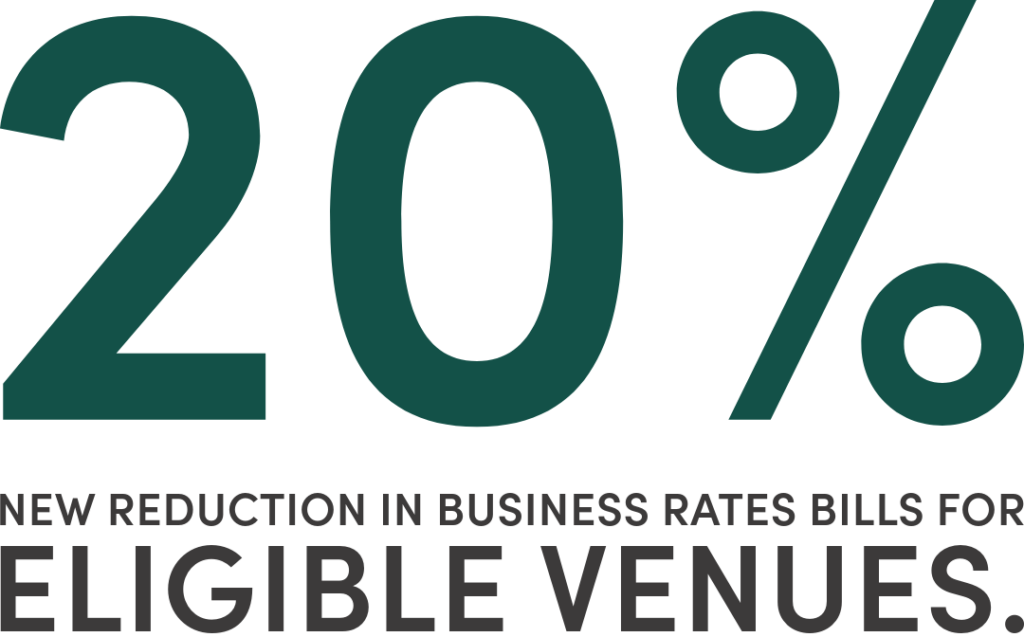
Prime Minister Andy Burnham has announced a new 20% reduction in business rates cut for pubs, social clubs and live music venues across England.
The support will begin in April 2027. It is not an immediate reduction and will not affect bills from July 2026.
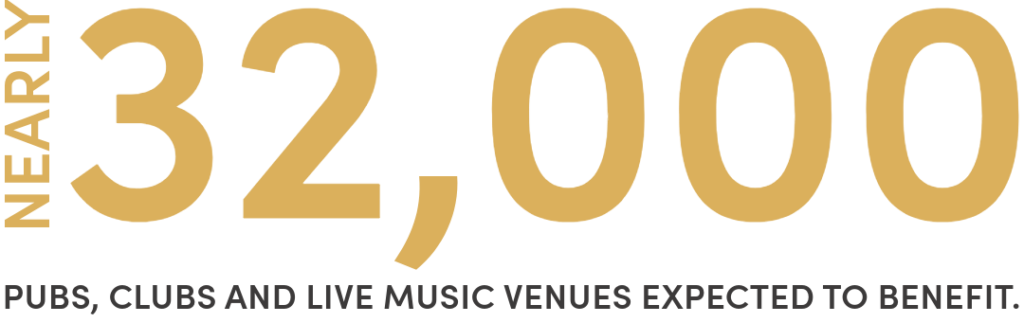
According to the Government announcement published on 23 July 2026, the measure is expected to benefit nearly 32,000 pubs, clubs and live music venues. The Government estimates that the typical pub could save around £1,100 in the next financial year, although this is an average estimate rather than a guaranteed saving for every venue.
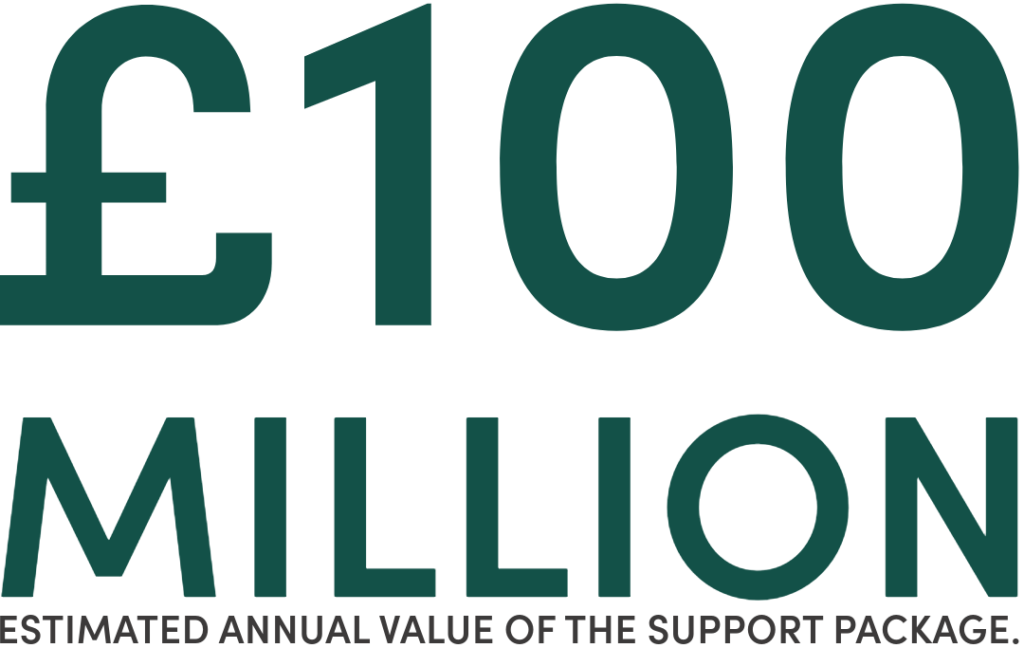
The package is expected to be worth around £100 million each year.
The announcement has been welcomed by some parts of the hospitality sector, particularly because business rates have been a long-standing pressure for pubs and night-time venues. But the response has not been simple.
Some operators have questioned whether the saving will be enough when set against wider cost increases. Hotels, restaurants and cafés are not included in the current announcement, which means large parts of hospitality are still waiting to see whether further support will follow.
The central question now is whether this marks the beginning of meaningful business rates reform for hospitality, or a welcome but limited first step.
When Will The 20% Business Rates Cut for Pubs Begin?
The new 20% business rates cut will begin in April 2027.
This timing matters.
For hospitality operators already dealing with rising costs, the announcement provides a future signal rather than immediate relief. The details around eligibility, including which businesses qualify and which large live music venues will be excluded, are expected to be set out at the Budget.
For eligible pubs, social clubs and smaller live music venues, the policy could bring additional certainty from 2027 onwards.
For venues outside the scope of the announcement, there is still no confirmed direct support under this measure.
Which Hospitality Businesses Are Included in the Business Rate Cut?
The Government announcement applies to England and covers three types of venue:
- Pubs
- Social clubs
- Live music venues
The Government has positioned these businesses as important parts of local high streets and communities, describing them as places that bring people together, support local jobs and help keep town centres active.
Prime Minister Andy Burnham said:
“This government will back the businesses that people want to see in their communities.”
That community focus is central to the announcement. The Government says the support is designed to back venues that play an active role in local life and help encourage investment in high streets.
However, the new 20% discount will not be available to the very largest live music venues. Further eligibility information is expected at the Budget.
How Does The New Support Fit With Existing Relief?
This announcement does not sit on its own.
The official press release says the Government had already begun work to reform the business rates system before this new measure.
At Budget 2025, a permanent 5p reduction in business rates multipliers was announced for more than 750,000 retail, hospitality and leisure properties. That was funded through a higher multiplier for the most expensive 1% of properties.
The Government also announced £4.3 billion of support for businesses facing increases after changes to rateable values. This included caps on bill increases of 15% for most affected businesses, or £800 for the smallest affected businesses.
In January 2026, a 15% reduction on 2026 and 2027 bills was announced for pubs and live music venues. Bills were also expected to be frozen in real terms for a further two years.
The new 20% reduction from 2027 and 2028 comes on top of that existing support.
It is important not to treat these measures as one simple combined discount. The existing 15% relief, the new additional 20% reduction, the multiplier changes and the revaluation support are separate parts of the wider business rates picture.
For operators, the actual impact will depend on individual bills, property circumstances and final eligibility rules.
How Will The Business Rates Cut Be Funded?
The Government says the policy will be fully funded.
According to the official announcement, the support will be funded partly by reviewing tax reliefs given to businesses it says do not make a positive contribution to local communities, with vape shops given as an example.
The Government also says it will take action against businesses selling through online marketplaces that do not comply with their tax obligations.
It is also consulting on measures to make online marketplaces more responsible for preventing sellers from avoiding tax obligations.
The BBC coverage notes that some of the detail around funding remains unclear, and that further information is expected at the autumn Budget.
That distinction is important. The funding approach has been set out by the Government, but the practical detail is still to come.
How Has Hospitality Responded?
The response from hospitality has been mixed.
Trade bodies have broadly welcomed the announcement as a positive step, while also making clear that it does not go as far as many businesses had hoped.
Allen Simpson, Chief Executive of UKHospitality, described the announcement on BBC Breakfast as “a good start” and said it showed “a direction of travel.”
UKHospitality also said the measure goes further than the 15% discount announced in January.
The Night Time Industries Association also welcomed the announcement, with Chief Executive Michael Kill saying the policy showed broader recognition of the economic, cultural and social contribution of the night time economy.
The organisation said the reduction could provide meaningful support to businesses facing continued cost pressure and help improve confidence across the sector.
However, the Night Time Industries Association is still waiting for full details at the Budget, including greater clarity on eligibility and why the largest live music venues are being excluded.
Why Do Some Operators Say More Support Is Needed?
For many hospitality operators, the announcement is welcome in principle, but the question is whether it will be enough in practice.
The Government estimates that a typical pub could save around £1,100 in the next financial year. For some venues, that will be useful. For others, especially those with larger bills or recent increases, it may feel modest compared with overall cost pressure.
The BBC coverage included comments from Iain Hoskins, owner of Ma Pub Group, which operates five hospitality venues across Liverpool.
He said:
“Twenty per cent is not an insignificant figure.”
However, he also explained that after revaluation, the rates charge on his venues had increased by between 100% and 150%. He said his group now pays between £200,000 and £300,000 a year in business rates.
His venues operate as café bars, serving coffee during the day and alcohol later, and he said he wanted more clarity around how mixed-use hospitality businesses will be categorised.
That example shows why the detail matters. A 20% reduction can sound significant, while still sitting against much larger increases and substantial annual bills.
The BBC also included comments from Steve Perez, founder of Global Brands and owner of two hotels. He welcomed the announcement, but said it would not make a material difference to many pubs when set against other cost increases, including employer National Insurance.
Although hotels are not included in the current policy, he described the announcement as “a glimmer of hope that the government gets it” and said he would prefer to see a sector-wide reduction in VAT.
That wider call for VAT reform remains an important part of the hospitality conversation. The BBC reported that many businesses continue to call for VAT to move from 20% towards the European average of around 9%.
The business rates announcement does not address that request.
What About Hotels, Restaurants And Cafés?
Hotels, restaurants and cafés are not included in the current announcement.
This is one of the most important points for the wider hospitality sector.
The present measure is targeted at pubs, social clubs and live music venues in England. It does not currently provide direct support for hotels, restaurants or cafés.
Chief Secretary to the Treasury Emma Reynolds was questioned by the BBC about why those businesses had not been included. She said further reforms would be looked at before the Budget and acknowledged that other businesses are also facing pressure.
That leaves the wider hospitality sector waiting.
Further reform may be considered, but no additional relief for hotels, restaurants or cafés has yet been confirmed.
For operators outside the current announcement, the autumn Budget will now be an important moment to watch.
What Details Are Still Missing?
Several points still need clarification.
The exact eligibility criteria have not yet been published.
Mixed-use venues, such as café bars that operate differently throughout the day, need clarity on how they will be categorised.
The Government has said the very largest live music venues will not receive the new 20% discount, but details of which venues fall into that group are still expected at the Budget.
The funding measures also need more detail, particularly around the review of tax reliefs and the proposed action on online marketplace tax compliance.
The wider sector is also waiting to see whether hotels, restaurants and cafés will receive any further support.
Operators should therefore treat this as an important announcement, but not the final word on business rates reform.
What Could This Mean For Hospitality?
For eligible pubs, social clubs and smaller live music venues, the new 20% business rates reduction could offer useful relief and greater certainty from April 2027.
It recognises that these venues play an important role in local communities and that business rates have become a serious pressure for many operators.
For businesses facing very high rates bills or recent increases following revaluation, the benefit may be more limited.
For hotels, restaurants and cafés, the announcement does not currently provide direct support.
For the wider sector, the most important signal may be that the Government has acknowledged business rates pressure and intends to return to wider reform at the Budget.
That makes this a welcome development, but not a complete answer.
What Happens Next?
The autumn Budget is now the key point for further detail.
Hospitality operators will be looking for confirmation on eligibility, funding, treatment of mixed-use venues, exclusion of the largest live music venues and whether wider hospitality businesses will receive any support.
The 20% reduction is likely to be welcomed by eligible pubs, clubs and venues that have spent recent years dealing with rising bills and continued cost pressure.
However, with an estimated average saving of £1,100, significant questions around eligibility and much of hospitality still excluded, the announcement is better understood as a first step than a full solution.
The real impact will depend on the detail that follows.
Business rates reform may offer some longer-term relief, but hospitality teams are managing operational pressure now. If gaps in your rota are adding to the strain, talk to the Ginger team about reliable relief or permanent staffing support.