The OWO, home to the first Raffles hotel in London, announces two of its nine restaurants

The large-scale development is due to hold nine restaurants, three bars, 120 rooms and suites plus 85 private residences.

Two restaurants have been announced as opening at the all-new Raffles Hotel in Whitehall later this year, part of The OWO Whitehall.

The former Old War Office, The OWO, will be home to the first Raffles hotel in London and promises to bring with it nine restaurants and three bars to create an all-new dining destination in central London.


With names hailing from across the world, Paper Moon is the first of the food and beverage outlets to be rubber stamped for opening this summer. The Milan brand is well-known for its sleek interiors and menu of contemporary Italian dishes, such as homemade ravioli stuffed with burrata cheese, raw red shrimp, and cherry tomatoes. With restaurants already in Istanbul, Doha, Hong Kong, the Algarve and Bodrum, this isn’t the first time the brand has spread its wings outside Italy’s fashion capital.

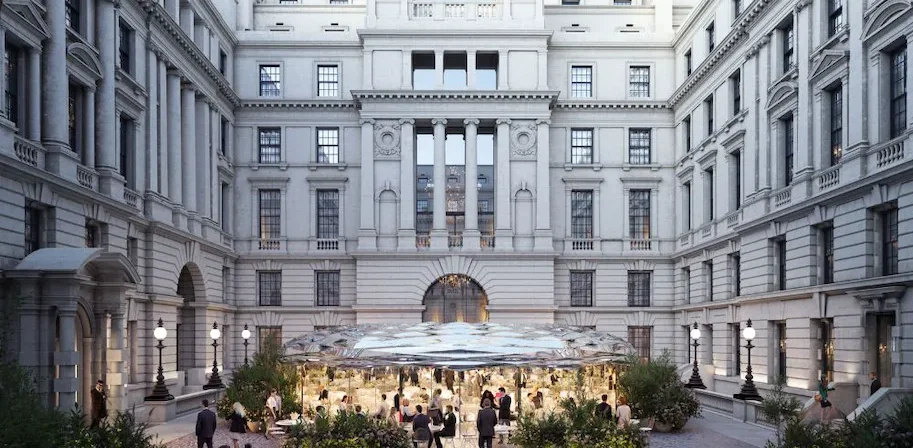
Next up, Parisian Cafe Laperouse is due to take up residency, another European hospitality name making its London debut. While the story goes that the Laperouse name traces back to 1766, the first iteration of the cafe opened in 2021 at Hotel de la Marine in the heart of Paris. Occupying a prime spot at The OWO, Cafe Laperouse will be found in the building’s central courtyard, offering guests both indoor and outdoor dining via a modern pavilion which can seat 80 diners (pictured as the lead image).

‘We are truly honoured and delighted to be partnering with The OWO for our very first London opening. Cafe Laperouse will bring its own sophisticated French presence to a London audience, which will excite, amaze and thrill diners. This will be a truly indulgent and different experience, offering a theatre of showstopping signature dishes served in stunning, opulent surrounds.’ Benjamin Patou, Moma Group Founder and CEO comments.

The OWO is due to open this summer, with the building having undergone an extensive multi-million-pound renovation. The OWO will include 85 private residences, nine restaurants and three bars – three of which will be housed in Raffles London at The OWO and overseen by three Michelin-starred, Italian-Argentine chef Mauro Colagreco.


Source: Squaremeal

‘Around here, people want top-end food’: how Lancashire’s Ribble Valley became Britain’s gastropub capital

Only a handful of UK towns can lay claim to being culinary centres. Over the years we’ve had hype as well as hearty reviews for Bray in Berkshire – care of the Roux brothers and Heston Blumenthal. There is also Padstow thanks to Rick Stein and posh fish and chips; Ludlow; Abergavenny with its farmers’ market and popular festival; and Malton, dubbed “Yorkshire’s food capital” by the late Antonio Carluccio.

Now Clitheroe in Lancashire has joined the exclusive little set. Well, I say Clitheroe, but really I mean satellites of the market town, three of which now feature in the new Top 50 Gastropubs list from the team that produces the influential World’s 50 Best Restaurants and other hit parades. A fourth local pub just misses the premier division, coming in at number 56.

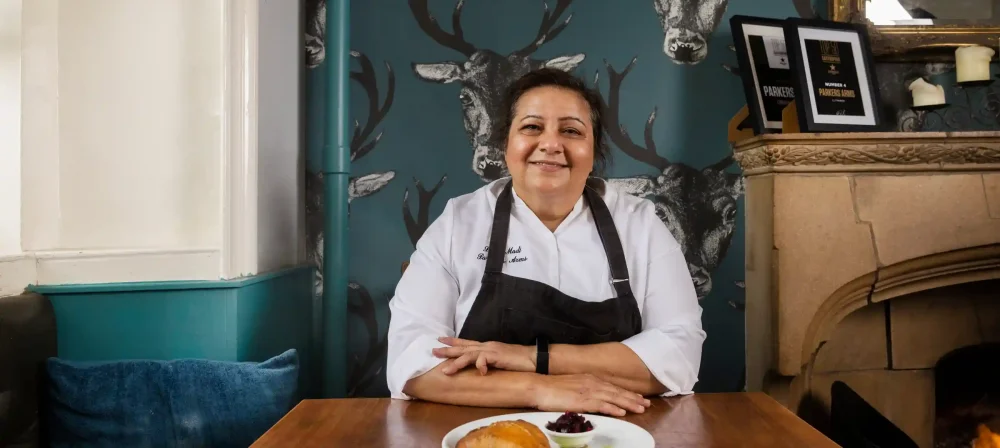
The top-ranked venue, the Parkers Arms, is in Newton-in-Bowland, a village with a population of about 300. Seven miles north of Clitheroe, along a winding country road, it’s on the edge of the Forest of Bowland, a designated area of outstanding natural beauty.


The pub has been owned since 2007 by Senegal-born chef Stosie Madi and manager Kathy Smith, since when it’s picked up plenty of regional prizes and been a regular fixture in the top 50 gastropubs. The food looks gorgeous and there are vegan and plant-based options, all very hip and cool for this sheep-rearing, grouse-shooting region. But it’s not a pretentious fine dining or experimental experience, and the prices are similar to those in a chicken-and-chips pub.

“We serve three courses for £45, and I’m not talking about three plates with tiny bits of food,” says Madi. “You don’t have to order side dishes or add-ons to make up your carbohydrates. We want to cook food that is delicious, modern with a light touch, but hearty and honest.

“We’re known for our signature dishes – our mutton and lamb pies. The Ribble Valley is excellent for meat. We source the lamb from Burholme Farm, just three miles away. Local game is also important in the Bowland area, and it’s extremely low in fat and high in protein. The pigs at Bowland Pork, our supplier, are outdoor hand-reared and free range, and the meat is superb.”

Depending on the season and availability, Madi also uses Morecambe Bay oysters, fish from Fleetwood and Formby asparagus. “We should use – and celebrate – local produce, because it’s only available for a few weeks a year. The supply chain is wonderful in Lancashire, though we do venture into Yorkshire for some items, such as rhubarb.”

‘The only way for a rural pub to survive is to welcome everybody. We are a food-led pub for people from all over’ –Stosie Madie, Parkers Arms

Lovers of real ale and trad pubs lovers will often muse about what constitutes an authentic local, but Stosie is a realist. “We can’t rely on local customers. The only way for a rural pub to survive, with all the energy costs and expenses, is to welcome everybody. We are a food-led pub for people from all over, including from Australia, Japan and America. We couldn’t survive if we served beers and a bowl of soup for two walkers to share between them.”

The Ribble Valley is relatively well-heeled but lots of local pubs and restaurants did go bust during the pandemic. Madi mentions the closure of two local cheese houses. “People need to put their money where their mouth is and buy good, local food.”

I’ve eaten twice in the third-placed restaurant, the Freemasons. It’s in Wiswell, also a tiny village but closer to Clitheroe and the A59, the main road between Preston and York. Once I had the tasting menu; the second time I tried the roast. The former was an elaborate, multi-sensory affair that tripped through plates of fish and meat and veg, aromas and textures and elegant compositions, and it all tasted delicious. The Sunday roast was smaller than your classic pub slap-up but, as usually happens with good food, the rich flavours made up for it. I did enjoy watching a burly farmer-type trying to make his delicate-looking starter of scallops with lobster knuckle last longer than a single bite.

Blackburn-born chef-owner Steven Smith concurs that being a drink-led pub doesn’t cut it any more. “So the natural thing to do is expand your offering, and if you have amazing food, you have a better chance of surviving. At the Freemasons we have our loyal locals but we also have some luxury rooms attached to the pub, which entices those from further afield.”

‘Pubs is what the north-west does best. When you come here there are 20 of them’ – Steven Smith, The Freemasons


Competition, he says, is driving quality. “The wealth of residents in the area certainly helped the Ribble Valley secure three gastropubs in the top 10. But more importantly, pubs is what the north-west does best. When we were driving down to the awards [in Suffolk], we couldn’t find a top-end food pub for 100 miles. When you come here there are 20 of them and we’re all fighting against each other.

“Around here, the public want top-end food, and brilliant service, wine and beer, and a vast amount of people around here feel at home within a pub environment. This is why the Ribble Valley has such a high proportion of incredible gastropubs.”

The number seven pub, the White Swan is in Fence, south-east of Clitheroe. Locally born chef Tom Parker worked with Lisa Allen at Michelin-starred Northcote hotel near Blackburn, and in 2011, at 21, was awarded Young Chef of the Year. After a stint cooking in Mexico, he moved back to Burnley and took the helm at the White Swan, which now has a Michelin star. It’s the only Timothy Taylors pub in Lancashire, and is still known as the Mucky Duck after the miners who once supped here.

With the Higher Buck in Waddington also featuring in the top 100 (at 56), there’s plenty to entertain foodies around Clitheroe. But, for those who want to explore further, the Angel in Hetton (sixth) just north of Skipton, Shibden Mill Inn in Halifax (14th) and the Butchers Arms in Hepworth (49th) are just across the Pennines. ‘You have to give credit to rural chefs and their partners for keeping local businesses up and running’

Sadly, the Moorcock in Norland, near Sowerby Bridge, which came 21st in the list, has just closed its doors. Being brilliant and scooping prizes is no safety net for local pubs, posh or otherwise, right now. Drive around this region and, like barns, chapels, post offices and churches before them, you’ll see lots of once-cherished pubs being turned into “character” homes. Even if you prefer pubs to be about beer and pork scratchings rather than aged beef and emulsions, you have to give credit to rural chefs and their partners for keeping local businesses up and running.

This gourmet road skims the southern tip of the Dales, gobbles its way through the Calder Valley (AKA Happy Valley) and then curves round towards Last of the Summer Wine Country and the Peak District – where the hills have always been more of a bond than a barrier. Of course, there are more award-winning, food-oriented boozers in the flat, sunny part of Yorkshire, but out there – as locals will happily boast – you may as well be in Berkshire or Wiltshire, which also have heaps of gastropubs.


Source – The Guardian
Galvin at Windows, stunning views and amazing food, from an exceptional team

There are some invites that just can’t be refused, and when I was invited to lunch at Galvin at Windows by Peter Avis FIH, the restaurant’s General Manager, I didn’t.

London’s Park Lane is a relatively short walk from Green Park tube station, and as you enter what is arguably Mayfair’s best known street, the London Hilton on Park Lane towers towards the skyline.

On entering the hotel a bank of lifts face you to take you to whichever of the 28 floors you are visiting. Lift D whisks you nonstop all the way to the top floor where Galvin at Windows is situated.

As I entered, I was greeted by two well-dressed and extremely welcoming receptionists, who took my coat and saw me to the table. As I walked through the restaurant, I couldn’t help noticing the well-dressed theme is shared.

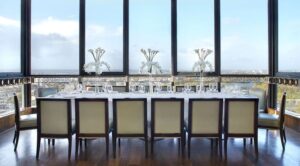
What is far more noticeable, even breath-taking, is the panorama of London from the 28th floor. The day was a crisp winter one and perfectly clear, so the views were perfect. From my table I could see every inch of Buckingham Palace, with the London Eye, and the Palace of Westminster clear in the distance.


I had arrived a little early and perused the menu before being joined by Peter, menu selection done, we start to chat. Peter’s enthusiasm and love of hospitality seemingly knows no bounds, and is led by his passion for helping people become part of and successful within our industry. It’s contagious, as is evident when we are later joined by Head Chef Marc Hardiman, as well as every other member of the team that I came into contact with while there.

The first round of chat is interrupted when we realise at least 20 minutes has passed and we haven’t ordered our food. Peter selected a salad to start, followed by the cod main course. I opted for venison tartare followed by beef Wellington. I was later informed by Marc Hardiman the venison was his signature dish, and what a signature it was, simply sublime.

As we enjoyed our lunch much of our discussions centred around Peter’s experience of working in hospitality.

His journey started as a teenage KP in Miami, then some years later he was working alongside Sir Richard Branson at Necker Island, Branson’s private island in the British Virgin Islands. Today of course Peter is running one of London’s most respected restaurants, and doing it rather well.

The view from the restaurant as already mentioned is unique, the food is exceptional, but… the most noticeable thing about the restaurant is the people, they all seem to be enjoying themselves as they diligently look after their guests.

As with many aspects of witnessing something done well, it’s difficult to assign it to one particular piece of the overall experience, so maybe the smiles are sufficient.

There can be no doubt about Peter’s motivation, he just wants everyone to enjoy what they do, and do it to the best of their ability. My experience of visiting Galvin at Windows is that the team are doing both.

It was my first visit, and in the past few days I have subsequently arranged a business lunch there with one of our customers in March, and my wife and I will be celebrating her birthday there in May. If you haven’t had the pleasure of dining there, treat yourself, you deserve it.


Source – Hospitality & Catering news

Michelin starred Oxfordshire restaurant makes list of 100 best UK eateries

A guide outlining the top 100 places in the UK to eat has been released, and an Oxfordshire restaurant has made it into the top 20. Eateries in London and Edinburgh make multiple appearances on the list, but just one county eatery has been included.

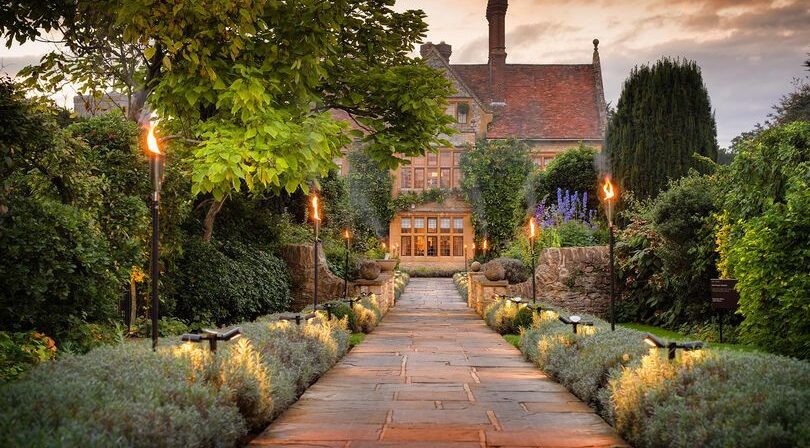
Le Manoir aux Quat’Saisons, in Great Milton, was founded by celebrity chef Blanc in 1984 and holds two acclaimed Michelin stars. The eatery set in a 15th-century manor house, featured on Harden’s 2022 top 100 list, coming in at spot 34, but this year the restaurant climbed up the league table.

The countryside eatery featured on the ITV series, Simply Raymond Blanc and now sits at spot number 16 on the UK’s top 100 restaurant list. Harden’s described Le Manoir aux Quat’Saisons as “one of the UK’s most spoiling destinations.”


Being one of the “most commented-on destinations” outside of London, the restaurant uses sustainable produce grown on-site to deliver its modern French-inspired cuisine. Doubling up as a 5-star hotel, with rooms available to book, many people make a weekend of the visit and stay in the gorgeous manor house to revel in the full experience.

However, dinner at this ‘ultimate treat’ of a destination doesn’t come cheap, with Harden’s stating that the price for a three-course meal, half a bottle of wine, coffee, cover charge, service and VAT comes in at a whopping £269.

Harden’s said of the restaurant: “A visit here often starts with a tour around the ‘spectacular and peaceful’ grounds and kitchen gardens: TV star Blanc helped pioneer the current vogue for sustainable produce grown on-site, and herbs and veg from the gardens regularly feature in the dishes.

“Gradual expansion has created over 23 bedrooms and suites, and ‘for a special occasion, especially a romantic one’, a night away here is many couples’ first choice. As an all-round experience, it’s hard to match.”

The top spot in Harden’s list was snatched by a Scottish location, the Gleneagles Hotel in Perthshire, where its dining space on the golf course holds two Michelin stars and costs roughly half the price of Le Manoir aux Quat’Saisons.


Source: Oxfordshire Live

Summit to tackle Hospitality industry’s vacancy crisis

Hospitality businesses in the region need to adopt an inclusive approach to their recruitment to try and solve the industry’s vacancy crisis, according to business leaders.

Coventry and Warwickshire Chamber of Commerce brought together a panel of experts at a major Recruitment and Skills Summit recently – including UKHospitality’s Skills Director Sandra Kelly – to discuss challenges around staffing, recruitment and skills, while offering practical advice.

It comes at a time when staff shortages are causing one in three UK-based hospitality businesses to close on one or more days a week, according to a recent UKHospitality survey, while the latest Office for National Statistics data shows there are around 152,000 hospitality vacancies in the UK.

Fleur Sexton, CEO and founder of training specialist PET-Xi, was one of the panel experts and said that hospitality businesses need to overhaul their recruitment strategies to fill vacancies.

She said: “The workforce is out there, but hospitality is only going to solve this recruitment crisis when it gets to a point when nobody is left behind – whether that is single parents, over-50s, school leavers or refugees.

“The days of a small workforce working maximum weekly hours are now gone because people want flexibility, and in order for businesses to adapt to this shift, they need to have a larger workforce working less hours.

“We also need to embrace those on the edge of society – including ex-offenders or those with a particular condition. Just because someone has done wrong in the past, or has a disorder where they find certain activities difficult, it does not mean they would not be a good employee.


“We also have a Covid generation of young people who, through no fault of their own, missed out on two years of work experience due to lockdown, and our Coventry-based restaurant Metropolis is now playing a key role in helping a backlog of young people to learn practical skills on the job before entering the local labour market.”

Sandra Kelly, from UKHospitality, underlined the crucial role that the UK government has to play in rejuvenating the hospitality industry.

She added: “We can point to Covid and Brexit as being disruptive, but the truth is that the UK has never really had a strong talent pipeline from education – or other areas of society – feeding into the hospitality industry.

“The UK currently has around 8,000 qualifications for any sector, yet in countries such as Canada and the Netherlands there are up to 100, which is where we need to get to in order to ensure that the training we are providing to recruits is relevant to industry.

“Last September, the government also made the significant move of enabling prisoners to start studying an apprenticeship whilst they were serving their sentence – regardless of their employment status. This means that we can soon get to a stage where, when ex-offenders are released back into society, they are already skilled and equipped to contribute to a hospitality setting.

“We are also urging employers to reach out to their local colleges to bring through the next generation of talent, like we have seen in Manchester where 33 hotels are partnering with 33 schools. For example, the UK needs 100,000 chefs annually to meet demand, and collaborations such as this are going to be key.”

Corin Crane, chief executive at the Coventry and Warwickshire Chamber of Commerce, chaired the skills and recruitment summit.

He said: “Being unable to fill vacancies – let alone having candidates with the right skills – is a major hangover from Brexit and Covid, but the overarching advice to any business in this situation is to adopt a collaborative mindset by reaching out to organisations such as their local Chamber.

“That way we can signpost them in the right direction – whether that is for recruitment, or funding for training that is tailored to both prospective and existing workforces.”


Source: Leamington Observer

Day 12 – Bovey Castle Hotel

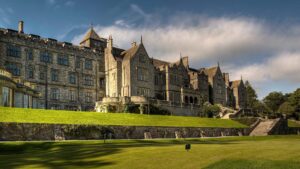
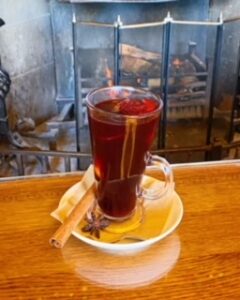
Our Ginger Christmas Truck Tour is ending with a big finale at renowned 5 AA red star awarded Bovey Castle Hotel. Bovey offers a range of dining experiences from afternoon tea to private dining. A staple of Christmas at the hotel is their historic Mulled Wine that guests receive on check-in and after completing one of the many outdoor activities Bovey Castle offers. Faron Ashby, the Head Bartender, specially prepared a glass of their Mulled Wine and spoke to us about working at Bovey Castle Hotel. “I enjoy working at Bovey Castle because I enjoy the challenges that I am faced with and working on ways to best overcome them. I also enjoy the fast pace of working within a hotel environment”. This recipe is one we will definitely be trying at home the Christmas!


Bovey Castle Mulled Wine

Ingredients

  • 5g ground Ginger
  • 4 Cinnamon Sticks
  • 20 Cloves
  • 3 Clementines (chopped)
  • 2 Bottles of Red Wine
  • 2 Shots of Brandy
  • 150g Brown sugar


Preparation

  1. Pour the of red wine and brandy into a heavy-based saucepan
  2. Add the cloves, Ginger, cinnamon sticks and clementines
  3. Bring the mixture just to the boil then reduce the heat until the mixture is simmering, cover the pan with the lid
  4. Continue to simmer for about 1 hour
  5. Stir in the sugar gradually during cooking
  6. Strain the mulled wine and serve


Day 11 – Tom Buckley-Wood, Bassenthwaite

Tom started his career working in the North East, earning 5 red stars, 1 Michelin and 3 Rosettes. Tom says Seaham Hall was where he ‘cut his teeth’, working his way up from Part time Front to Assistant Restaurant Manager. He spent a number of years travelling through Europe and the UK, working within all aspects of hospitality, including the kitchen. Tom has had the pleasure of working with some of the world’s best including Kenny Atkinson and Steven Smith to name a few. Tom’s Christmas cocktail of choice is a ‘Winter Apple’. We can’t wait to try this one!


Winter Apple Cocktail:

Ingredients

  • Otterbeck Winter Gin
  • Apple Purée
  • Apple juice
  • Star anise


Preparation

  1. Add ingredients to a shaker and shake
  2. Strain over ice into a cocktail glass
  3. Served a garnish of with orange slice and cinnamon stick

Day 10 – Scott Williams, Morecombe

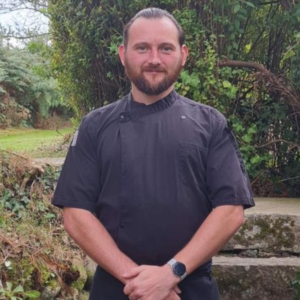
Scott has travelled across the world with his impressive culinary skills. He has been the Head Chef of the La Vert in Chamonix, the Pastry Chef at the Ostera Bay on the Cayman Islands. His culinary adventure doesn’t stop on land, having also worked on the Queen Mary 2 cruise ship.

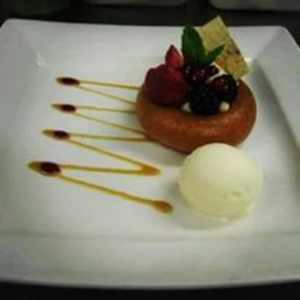
Amazingly Scott has managed to fit in being a passionate Ginger Chef alongside his busy traveling schedule since August 2020, representing us in the kitchens nationwide. Read on to find out how to make his favourite Christmas recipe… Mulled Wine Baba!


Mulled Wine Baba

Ingredients

  • 125g plain flour
  • 3 eggs
  • 12g honey
  • 8g cinnamon
  • 4g salt
  • 25g butter melted and cooled
  • 8g yeast
  • 20ml warm milk


Preparation

  1. Mix the yeast with the milk and wait to bloom
  2. add the liquid butter and whip in eggs
  3. add to the flour, cinnamon and honey and mix till a smooth paste is formed
  4. Place into a piping bag and allow to double is size (prove)
  5. Grease spray a savarin mould and pipe in half way full allow to re prove then bake in oven for 12 -15 mins until fully raised and light and fluffy


Mulled wine syrup

Ingredients

  • 250g sugar
  • 1000 ml water
  • 2 vanilla pod
  • 275 ml mulled wine
  • 1 lemon rinds
  • 1 orange rinds


Preparation

  1. Bring all to a boil and allow to cook for 5 mins
  2. Remove from heat and allow to cool
  3. Once cooled use this syrup to dip the baba in once cooked


Day 9 – James Lawson, Lancaster

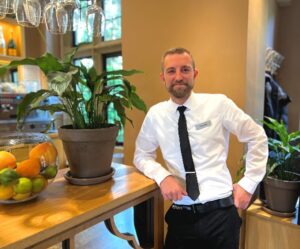
James is another great example of the fabulous talent Ginger Hospitality provide to their clients every day. James is a confident, highly resourceful hospitality professional with a wealth of experience managing Front of House teams within highly regarded Hospitality venues. James is an asset to the Ginger team, working in 5 red star and Pride of Britain Hotels across the country as a Ginger Relief Restaurant Manager. James always showcases his talent within whatever restaurant he works in, no matter the level. James’ recipe for Mrs Claus’ Cranberry Sauce is definitely one we’ll be recreating this Christmas!


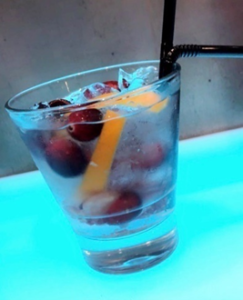
Mrs Claus’ Cranberry Sauce

Ingredients

  • 50ml Bombay Sapphire
  • 150ml Fever Tree Tonic
  • Orange Peel
  • Cranberries


Preparation

  1. Measure out Bombay Sapphire, pour it into glass with ice
  2. Add Fever Tree Tonic
  3. Garnish with Orange peel and Cranberries


Day 8 – Curtis Blackmore, Gisburn

Curtis started his career at The Duke of York in Grindleton under Michael Heathcote at age 17. He then moved to Coventry to take his first Head Pastry role and later moved to Hertfordshire to work at Brocket Hall/Auberge du Lac in his first Michelin kitchen. Curtis then went on to work for Nathan Outlaw for 18 months; learning the ins and outs of everything seafood until 2018. After years of experience in the kitchen, Curtis opened a venue in Accrington, his hometown, which he owned for 2 years. Curtis has been working Nationwide for Ginger as a Relief Chef ever since, and says he ‘couldn’t be happier’. For Curtis’ favourite Christmas recipe, he’s chosen… Gingerbread Blondies!


Gingerbread blondies

Ingredients

  • 200 g unsalted butter (melted)
  • 250 g light brown sugar (or white granulated/dark brown)
  • 3 medium eggs
  • 1 tsp vanilla extract
  • 275 g plain flour
  • 2 tsps ground ginger
  • 1/2 tsp ground cinnamon
  • 1/2 tsp ground nutmeg
  • 1 tbsp cornflour
  • 200-300 g white chocolate chips


Preparation

  1. Preheat your oven to 160c (fan) and line a 9×9″ square tin with parchment paper
  2. In a bowl, add the melted butter and sugar and beat until smooth
  3. Add in the eggs and vanilla and beat again until smooth
  4. Add in the plain flour, cornflour, ground ginger, ground cinnamon, and nutmeg and beat until a thick blondie mixture is made
  5. Add in your white chocolate and fold through!
  6. Pour the mixture into the tin and spread
  7. Bake the gingerbread blondies in the oven for 25-35 minutes, or until there is a slight wobble in the middle
  8. Leave to cool in the tin
  9. Decorate with melted white choc and gingerbread crumb