Service robots

Boparan activate two service robots in a trial that could lead to deploying hundreds

Boparan Restaurant Group has announced the implementation of two service robots being trialled at BRG’s Slim Chickens in Guildford which opened last week.

Using artificial intelligence the service robots can deliver hot chicken at speeds of up to 4 mph via laser guided accuracy, providing the restaurant team with more time to focus on engaging with customers.

Programmed to be fully automated, the robots enhance the dining experience and can engage with guests through spoken conversation, take orders and deliver dishes, both to tables and for collection – they will even purr if you touch them.

Infrared cameras, laser radars and sensors ensure smooth transitions, navigation and obstacle avoidance.


Marking the latest step in BRG’s wider investment strategy focussing on innovation and optimisation, the robots will be rolled out across BRG’s estate of over 100 restaurants nationwide if the trial proves successful.

Nick Smith, Commercial Director of BRG, comments: “We are committed to evolving the guest experience whilst supporting our teams in delivering the quality food and hospitality that Slim Chickens and BRG are famous for. The robots, along with our kiosks, app and table ordering, are the next stage in our digital journey. We don’t plan to replace our team with robots, they are here to support them and make their jobs easier.”

Source: hospitalityandcateringnews.com

hospitality businesses

Chef launches project to connect Ukrainian refugees with hospitality businesses

A chef is preparing to travel to the Ukrainian border next week after launching a campaign to connect refugees displaced by the conflict with hospitality businesses able to offer accommodation and employment.

Steven Saunders, of the Willow Tree in Bourn, Cambridge, previously worked in Ukraine and has launched the Odessa Project with Willow Tree owner Shaina Galvin.

Last week he called on the government to approve fast-track visas giving the right to work after being contacted by more than a hundred businesses wanting to welcome refugees.

He has been in contact with ministers and is now confident his scheme will be approved, in line with the government’s own proposal, which it is understood will grant Ukrainians at least three years’ leave to remain, the right to work, access to public services and most benefits.

The chef told The Caterer: “The objective is to get work permits for the Ukrainian people for when they get here. We need to get them here and find places for them to live, but they don’t want to just stay with people they want to work and earn money.

“I had more than one hundred messages, one after the other, all saying ‘we have accommodation, we have jobs, when can we help?’ It’s quite emotional, I didn’t expect this kind of response.”

He plans to travel to Lublin in Poland and Ukraine’s border with Moldova to speak to refugees and has ambitions to place 1,000 individuals with UK hospitality businesses. He said 100 businesses have signed up to date and he hopes 200 more will come forward.

He added that the project will be mutually beneficial, providing employees for an industry “on its knees”.

“There are no staff in hospitality – I could employ another two or three chefs here today. All hotels and restaurants are crying out.

“We’re saying we can give people jobs, salaries and accommodation. We primarily want to help refugees but also help hospitality.”

After the government was heavily criticised for the lack of support shown to refugees, Michael Gove launched the Homes for Ukraine refugee scheme, allowing individuals to apply to host Ukrainians in their homes. Health secretary Sajid Javid has since said there will be no cap on the number of people offered support.

Those wishing to sign up to the Odessa Project can contact Saunders on thechefsaunders@gmail.com.

Credit: thecaterer.com

COVID restrictions

Raymond Blanc: Covid has changed people’s attitude to work, for better and worse

The pandemic has changed the UK job market and affected people’s attitudes to work, presenting both opportunities and risks, chef patron of two Michelin-starred Le Manoir Aux Quat’ Saisons, Raymond Blanc OBE has said

Speaking to The Daily Mail, the chef said that while the effects of the pandemic had allowed restaurants to rethink outdated working practices and improve conditions in kitchens, there is a risk that the shift will take things too far, to the detriment of the ‘spirit of the entrepreneur’ that dominates in the country.

Comparing the UK to France, where a 35-hour working week policy has been in place for 22 years – mandating that any additional hours be paid as overtime – he said: “It is a nightmare because we completely murdered the sanctity of work and killed the spirit of the entrepreneur.”

“It’s really killed our craft in many ways, whereas England embraces liberalism and 48 hours and plus you can sign a piece of paper and you can work 50. Now it’s over.”

The chef stressed that the shift in attitude presents great opportunities to ‘revolutionise’ the hospitality sector, allowing it to to reinvent itself and abandon ‘cruel’ practices such as split shifts, which have indeed been dropped by many businesses in the sector, as well as more and more establishments introducing four-day working weeks.

Source: thestaffcanteen.com

Hotel sustainability

Chiswick London W4 setting an example in hotel sustainability

As Global Recycling Day approaches, the Founder of the world’s first fully whole life net zero hotel, Robert Godwin is urging the hospitality industry to step up when it comes to sustainability. At the forefront of eco innovation, Godwin illustrates how hospitality businesses can through improving sustainability, promote sustainable travel and tourism.

Setting a new global standard for environmental responsibility, room2 Chiswick is set to use 89% less energy than the average UK hotel.

Godwin has set a companywide roadmap to be net zero by 2030, ahead of the hotel industry’s pledge to cut greenhouse gas emissions by 50% by 2030 and 90% by 2050, showing that it is both possible, and necessary for hotels to contribute in the ongoing battle against climate change.

Here are his five key steps for hospitality businesses to consider actioning.​​

  1. Reduce your waste – First you need to understand your waste streams to see how you can reduce them. A great way to do this is by separating your waste into glass, mixed recycling, cardboard, organic waste and general waste. You need to engage with your guests and employees to educate them on waste management and make this easy for them to follow. For us, this was designing our own 3-in-1 bespoke bins. We couldn’t find any suitable bins on the market that looked good and communicated clearly on waste disposal, so we made our own. We believe we’re the first hotelier to offer this service in each guest room.

Once you’ve separated your waste you can then see where you could do things differently, such as donating leftover food to toogoodtogo or choosing suppliers that use no or less packaging. Alongside separating and reducing waste you can identify the right waste partners that can ensure that nothing is sent to landfill, recyclables are recycled into new products and waste is burnt to make energy.

  1. Help your employee’s own sustainability in their role – Sustainability shouldn’t be siloed in one team as it is relevant to everyone. To have a significant impact each one of your employees should be educated and motivated to take ownership in their specific roles to make a difference. This could be done with monthly meetings and helping your employees identify how sustainable changes and choices can be made in their specific role and in their personal lives.
  2. Measure your emissions – The first thing to do is identify your baseline emissions, by calculating and reporting scope 1, 2 and 3 emissions then find ways to reduce your emissions. Unavoidable emissions should be offset through a verified carbon sequestration project. Aligning to science-based targets is the best practice and ensures that your business has a clearly defined pathway to decarbonisation.
  3. Switch to renewables and electric only – Switching to a renewable tariff is relatively simple but will make a huge impact in reducing your direct emissions. Make sure you do your research to identify the fuel mix of your supplier. Upgrading and retrofitting systems to electric will further reduce your emissions and will require significant planning and work to find the right solution for your building whether that is air source heat pumps, electric boilers, or other technology.
  4. Use your voice – Use your reach to motivate others to make changes whether that’s your guests, suppliers or calling for new legislation in the industry. You have a unique opportunity to make an impression on your guests whilst they experience a stay with you. This could be through information points about key issues or highlighting what you are doing differently like switching to refillable toiletries or generating renewable energy. Your guests should have an enhanced stay through the changes you make and not have to do the heavy lifting, so make sure that the sustainable changes are seamlessly integrated into your systems.

Source: hospitalityandcateringnews.com

Team Ginger

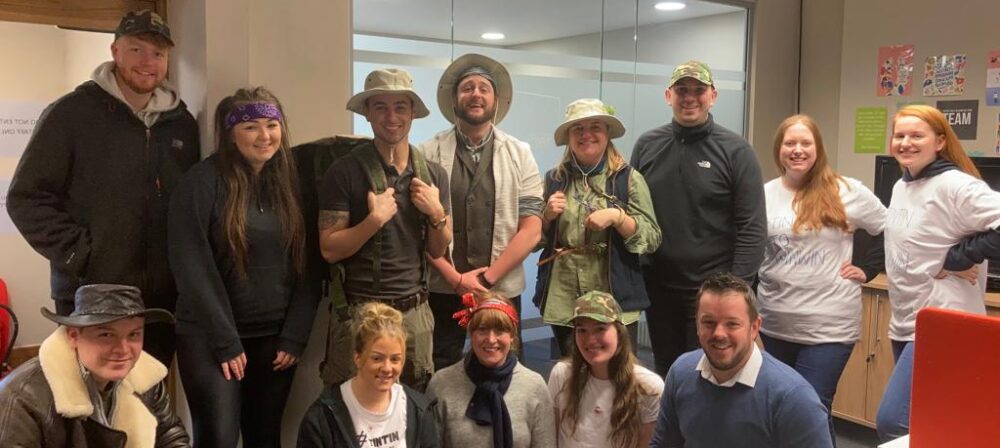
The Ginger Treasure Hunt

See exactly what we got up to on the Ginger Treasure Hunt and team building afternoon…

Well done adventures the task is complete,  you’re taste of victory is so sweet.

Remember, without other players the game is not so much fun, and competition can never have begun.

The true treasure is when many become one, and we are all back together with unstoppable momentum.

Friendship and trust is the real gold in life, and that kind of bond can’t be cut no matter how sharp the knife.

~ Colin MacIntyre, Director of Client Services

Is the four-day working week possible (or even desirable) in hospitality?

Is the four-day working week the solution to an industry badly in need of a break, or will it merely pile more pressure on an industry struggling to recruit?

Steam hisses above a busy prep station in the Devonshire Arms Hotel & Spa’s Burlington Restaurant. A chef carefully but efficiently scrapes potatoes. At another station, one chops shallots in a seriously specific way – separating each leaf, then carefully peeling off the inner membrane and cutting the leaves into 2mm cubes. The calm outside belies the intensity inside to be ready for service. But the staff here seem focused and content. Does it have something to do with the 3 AA Rosette restaurant’s ‘four-day week’ policy?

Stress

Like thousands around the UK, this service follows immense disruption in hospitality. In our chaotic world, the restaurant is a refuge where people come to find joy and happiness.

But behind the scenes of many venues, the pressure of working in hospitality seems to be at boiling point. Staff absences in hospitality for December were 5.5 percent, almost double the national average of 2.7 percent (ONS, Jan 2021), and a surge in cancellations at the end of last year piled pressure on the industry.

Staff vacancies are also high: there are more unfilled jobs in hospitality than in any other sector. These stresses have brought staff wellbeing into sharper focus than ever. And one of the measures discussed more than ever is the four-day week. Is it the solution to an industry badly in need of a break, or will it merely pile more pressure on an industry struggling to recruit?

Staff welfare

The Devonshire Arms is a group of luxury hotels and restaurants across Yorkshire and Derbyshire. Its managing director, Richard Palmer, sees staff welfare as key to attracting and retaining the best talent.

“We have implemented a four-day working week for all of our teams from senior level down,” Palmer said. “But the problem currently is that we have enough staff to facilitate that four-day working week, a problem we’re solving with specialist recruiter Ginger Hospitality. Working with them, we’re backfilling the kitchen with relief chefs, whilst finding the right permanent talent.”

“But staff welfare comes first, flexibility is becoming a key part of that, and filling the extra permanent positions to accommodate a four-day week is the next piece of the puzzle. It’s a sector that’s about bringing pleasure into people’s lives, so helping hospitality staff be happy at work is all-important.”

For some, shorter weeks raise concerns about consistency

Craig Jackson spent more than 20 years in hospitality, latterly as a general manager, before moving into talent. As the head of permanent at Ginger Hospitality Recruitment, he is uniquely placed to see the needs of both talent and recruiter, and he thinks that for certain chefs, reduced hours don’t always equal happier staff.

“What I hear from senior chefs is that they’re not massive fans of four day working weeks for themselves,” Jackson says. “They really want to be in the kitchen five days a week to have control over their vision, standards and creativity. It’s about consistency for them. And the passion for being in the kitchen and being a chef can sometimes rub against the trend towards a four-day week.”

The roots of the four-day week

The four-day week previously gained steam in the 2019 election, when then-Labour leader Jeremy Corbyn put cutting the number of days we work at the centre of his manifesto. But this month, trials for a four-day week began in earnest with 30 companies from different sectors trying it out (the participating firms haven’t been announced). The trial is hoped to show greater productivity, improved work/life balance, reduced burnout and increased staff retention.

In hospitality, flexibility is crucial

David Edwards is the executive chef at Brunning and Price, which runs 79 gastropubs. “We want to do it. But it’s not always possible,” he said. “Across the entirety of our portfolio, there’s just not enough staff to do so. However, in the sites that can do it, it’s actually working really well.”

Despite not being able to offer a four-day week in all its 79 gastropubs, Brunning and Price is extremely flexible in terms of the working contracts it is able to offer its employees. Indeed, this flexibility is far more important to many employees than a one-size-fits-all four-day week policy.

So, for example, although a four-day working week might work well for one chef, some chefs prefer to work five day working weeks, because that suits their lifestyle better.

Edwards continued: “Flexibility allows work to fit around our people’s lifestyle. Staff with childcare commitments prefer to do five days in terms of the shift patterns that they offer.”

Split shifts are coming back, due to the flexibility they offer. “Not everybody wants to be doing straight shifts,” suggests Edwards, “despite them being pushed in the industry. We offer them, of course, but for people that have lifestyle commitments in the afternoon, split shifts over five days are a better way of working.”

Although the four-day week is gaining some momentum, only 3-5 percent of British businesses have adopted it so far, and a hard-and-fast rule around it seems suited to typical, 9-5 office jobs. In hospitality, supporting staff welfare and wellbeing – whilst accommodating lifestyle needs – might mean being open to more than a one-size-fits-all approach.

Craig Jackson added: “Brunning and Price is one of the best at accommodating their workforce,” he said. “Where they can’t do four-day weeks, they have contracted 48 hour working weeks for their sous-chefs, but they pay them overtime up to 55 hours.”

That’s a boon for junior chefs. Anyone below the rank of sous (i.e. trainees and CVPs) is on a 45 hour working week, but gets paid overtime for anything over that. “And for many up-and-coming chefs, the work is a calling, and they want to work every hour they can, so being able to work longer and actually get paid for extra hours is great. Overall, we’re seeing more flexibility, in various guises, in the hospitality sector than ever.”

By Angela Byrne, founder, Ginger Hospitality Recruitment

Source: thestaffcanteen.com

Sustainable Restaurant Association launches One Planet Plate campaign

Raymond Blanc, Asma Khan and Thomasina Miers are among a host of chefs backing One Planet Plate, the Sustainable Restaurant Association’s (SRA) campaign that highlights sustainable offerings on restaurant menus.

The high-profile trio’s restaurants (Belmond Le Manoir aux Quat’Saisons, Darjeeling Express and Wahaca) are among more than 2,000 participating venues offering ‘One Planet Plate’ on their menu.

Blanc, president of the SRA and chef-patron of Le Manoir, said: “What we eat has such a huge impact on our precious planet… We only have one planet, so every dish we serve in our restaurants must be designed to respect and protect it. Our future depends on it.”

Juliane Caillouette-Noble, managing director of the SRA, said: “Too often, diners are unaware of what sustainable food means. After the success of the One Planet Plate campaign in 2018 in putting sustainable food at the centre of 2,000 restaurant menus, now, when awareness about the impact of food has never been higher, is the perfect time for every restaurant, pub and canteen kitchen to show the public what they’re doing to contribute to a better food future in the tastiest possible way.”

Chefs looking to add their take on a One Planet Plate can submit their dish via www.oneplanetplate.org or by emailing oneplanetplate@thesra.org. The campaign is presented by HSBC.

All One Planet Plates must satisfy at least one criteria from the following:
• Use locally sourced, seasonal and non-intensively farmed produce
• Rethink how food surplus or common by-products are used • Shift the proportion of animal protein towards plant-based ingredients
• Use fish from reliable stocks
• Have a low carbon footprint

Source: Thecaterer.com

Housekeepers Can’t Count On Career Growth, Gender Parity Just Yet

We must be mindful about the selection, hiring and training of housekeeping staff as potential avenue to identify, upskill and promote women to leadership positions. Too many housekeepers are represented in stereotypical roles in the hotel business.

Contributed by Angella Reid, COO, Heritage Consulting by B+R, Las Vegas

Nothing repels paying guests more than housekeeping standards that are below par. A hotel’s cleanliness quotient sets the tone for quality service while good housekeeping is the surefire way to enhance guest experience and improve a hotel’s bottom line.

According to the March 2, 2021, report of the Bureau of Labor Statistics more than 88% of hotel housekeepers are women with over 67% being people of color.

There are historical, structural and cultural issues which determine the operational roles women get to play in the hospitality workforce that impacts their status as well as opportunities within the industry. It is time to remake the people strategy model of how the hotel industry is operated.

As we work our way out of the COVID pandemic, the service industry is experiencing severe shortages of labor. There are varied opinions about why folks are not rushing back to their old jobs. Are extended, enhanced unemployment benefits to be blamed? Is it also true that these jobs are more physically challenging, without the commensurate pay package? Probably and particularly for women, childcare solutions are still unavailable due to the pandemic. I think that this so called “pandemic pause” has allowed employees to take stock of the jobs from which they got laid off or furloughed. They used the time to re-evaluate the last value on their efforts versus compensation ratio. Never in my lifetime have we faced the opportunity to step back from work and assess our jobs without feeling duly pressured.

The unplanned sabbatical demands both employers and employees recalibrate their norms to match up to the demands of the emergent economy. Not every industry can play in the remote and gig economy field. Hospitality is one such sector that entails a face-to-face engagement to achieve its full potential in servicing intentions and meeting expectations.

I don’t want to be served by a robot when I visit a hotel, or I’d have rather stayed home. I might possibly select a “robot-led” hotel specifically if I was seeking out that experience but, generally speaking, I prefer the human touch.

With the pandemic pause comes the fallout of women leaving the hospitality industry over age old societal expectations upon them to step up to fill in for the unavailable child-care service providers and other important roles as caregivers.

This is undoubtedly a setback for achieving closure on gender parity that we have been pursuing for many years. This shift will also negatively influence the rise of women to leadership roles in the hotel industry even as they consider other job opportunities or, simply choose to stay at home.

This got me thinking about how we may reshape and switch our paradigm around women generally employed in the poorly perceived, lower economic status jobs like housekeeping in the hotels business.

We do not need to look very far to find a ready supply of future hospitality leaders as we can tap into and grow this pipeline of our future leaders.

The hospitality industry does not suffer from a lack of female representation. On the contrary, it enjoys an abundance of women at low paygrade levels with little focus or a plan to develop and uplift them. This is what really ails the industry.

According to Julia Campbell, founder of Women in Hospitality, in 2017 the hospitality sector workforce was comprised of 55.5% women but was still dominated by men in managerial positions. As per the Castell Project report in 2019, only 11% of hotel company leadership positions (managing director, president, partner, CEO) are held by women. The report goes on to suggest that the odds of a woman reaching the top leadership status, are one woman to eight men.

I launched into my hotel career right out of high school with no idea it would become my life’s career and passion. My rise up the ranks was due to early years of mentorship and a conviction to work harder and more efficiently at the vocation I chose to pursue.

I consistently demonstrated a “can do” attitude to key stakeholders and outside influencers, being a quick study and showing the commitment to put in the time. I believed in myself, and people believed in me, investing their time and knowledge to guide my journey towards success.

Of course, there were times I lost faith in my ability to rise up the ranks in hotels, but each time I talked myself off the ledge more determined, never to wallow in self-pity nor to be crushed by the weight of failures and, criticism from others.

It is an industry I love and benefit from – one to which I made valuable contributions and has contributed to my own success. I made it a point to gain job experience at the front desk, housekeeping, HR, engineering, food & beverage because I wanted to understand the whole model. I never wanted to be labelled as a rooms or F&B person but, as a generalist. Along this journey I grew to understand the impact of the work of our housekeepers.

I have witnessed firsthand the crap they encounter in rooms, the carts they push from floor to floor, the pressure they face when front desk needs the room rush cleaned, etc. It’s backbreaking work. Somehow, though, few housekeepers rise up through the ranks and become senior leaders.

I think there are various reasons for this. For me, two reasons are clearly evident.

First, housekeepers generally prefer to stay in the background as they often feel unequal to colleagues who serve at the front end of the hotel. Second, the brighter stars often don’t wish to move into leadership fearing longer work hours with less opportunity for overtime, when they turn “exempted,” and because they are usually the (sole) breadwinners in their families. They need to earn incremental income from “buying rooms” (being paid for cleaning a number of rooms over and above their assigned daily quota) and doing overtime whenever possible.

Room attendants have traditionally been females, mostly from lower income backgrounds, who often do not speak the local English language, fairly fluently and, often times have families to support. Women who I knew in housekeeping generally felt their jobs were less dignified when compared to employees who worked on the front desk.

How many hotels demonstrate to room attendants the true value they bring to the success of a hotel by investing in their career development? We are mostly focused on how to improve their productivity.

Source: hotelsmag.com
Free mental health courses made available to Scottish hospitality industry

Hospitality Health in collaboration with HIT Scotland has made mental health and wellbeing training courses available for free to staff within the hospitality and tourism industry.

The range of courses aims to provide managers with the tools to support employees, improve their mental wellbeing and ensure they feel supported as the industry bounces back.

The courses have been funded through the Tourism Recovery Fund and supported by Skills Development Scotland.

The courses provide opportunities at a variety of levels and include:

  • Mental Health First Aider training
  • How to train Mental Health First Aiders ‘in-house’
  • Wellbeing and mental health issues
  • Resilience techniques
  • How business culture can improve the wellbeing of employees

Applications will open on Monday 24 January 2022, closing on Sunday 6 February 2022. There are a limited number of places available on each of the programmes.

Gordon McIntyre, chairman of Hospitality Health, said: “What a fantastic opportunity for the industry. Without the funding support from the Tourism Recovery Fund we would not be able to offer this. It will have a huge impact on the wellbeing and mental fitness of the staff within the hospitality and tourism industries and should have a lasting impact.”

David Cochrane, chief executive of HIT Scotland, said: “It is the people within the industry who will drive the recovery of the industry. Therefore, the wellbeing of individuals across the sector is paramount. This suite of development will enable many businesses to improve their knowledge in this area, and build up a culture of resilience and support for their teams for the long term.”

Source: thecaterer.com

The Top Gastropubs

Lancashire is filled with outstanding gastropubs and the Freemasons at Wiswell is one of the top venues in the region.

Owned by Steven Smith, this elegant Lancashire gastropub is deserving of it position among the top 10, which it has held for several years now. This year the pub has pushed its way back into the top five, having dipped into sixth place in 2020 for the first time in years.

As well as serving many outstanding dishes, Smith has launched an accommodation offering and his own spin on a chef’s table following a big refurb and revamp of the business, which was completed in 2019.

Food at the Freemasons is all about contrast – experimental meeting traditional. Smith fuses locally sourced ingredients and his love of the classics with wild, sharp world flavours.

In the hands of a lesser chef it could so easily go wrong but Smith pulls it off with professionalism and gusto, creating a delicious roster of food you have to experience to believe.

Menu highlights have included foie gras with beer vinegar, blackberry and smoked eel; roast loin and kofta of Nidderdale lamb with BBQ gem lettuce, miso aubergine, mint and yoghurt; as well as butter-poached native lobster tail with crispy claw wontons, wild blueberry, coastal herbs and black pepper sauce.

Desserts have featured rice pudding baked with vanilla, blackberry, sake and buttermilk ice cream; Amalfi lemon meringue pie; and dark chocolate with banana, black sesame and yuzu.

While the dishes may sound fantastical (that they are) with their unusual ingredients, the Freemasons is very much a pub, with Smith and his team (including his wife Aga, the award-winning front-of-house manager) entrenching themselves in the local community.

They host summer barbecues, regular “chippy teas” and more delectable tasting evenings than you can shake a duck-fat chip smothered in caviar at.

The focus is not all on the food, as Smith launched the pub’s first guest rooms – four in total – to feed demand for accommodation in the surrounding area of natural beauty.

Along with the rooms, Smith has boosted the size of his already ample kitchen to make way for the chef’s table. It is not the familiar, arguably over-used, simple chef’s table many foodies familiar with the concept have become accustomed to. Smith’s is a true ‘Kitchen Table’ and sits at the very centre of the busy kitchen space so diners are right in the action.

Smith does not follow in the wake of others when it comes to his pub. This is most obvious from the chef’s table, with which Smith dares to go beyond boundaries others would not.

Speaking about the extension, he says: “It is a chef’s table but we didn’t want a traditional one, we wanted it to be original and a first and another reason why people will want to come to the Freemasons.”

He adds: “I’ve said many times that we want to be the best pub in the world, so we’ll see where this takes us.”

Source: top50gastropubs.com