Why are Hospitality Businesses Choosing Permanent Recruitment?

The hospitality industry is no stranger to outsourcing recruitment, and with the industry having been through, and still somewhat enduring turbulent times, a national staffing shortage has befallen every business from local restaurants to their Michelin starred establishments. The need for a more sustainable model of employment has had to emerge. No longer can the industry rely on short term casual relationships with many of their employees. People such as Tom Kerridge have recognised that the industry has via its rates of pay and working conditions created an image of low skills. But Kerridge points out how wrong this image is, as Michelin starred establishment owner it is clear that even the seemingly humble dish washer is essential to maintaining his reputation and as such deserves to be paid and treated accordingly. The industry must build long term sustainable relationships with its employees so that when the next crisis arises, they do not simply leave the industry for better terms and conditions. Here at Ginger Hospitality we have benefitted from this shift in attitude. We have always regarded our hospitality candidates as key to a client’s success always striving to place the right candidate with the right client. As you can imagine our business was wiped out during the first lockdown but we refused to retreat like so many others. We worried about our clients and our candidates and made sure we constantly spoke with them to offer what help we could. As life has returned to some normality we have been able to leverage our relationships to continue to try to ensure that every placement is of benefit to both the client and the candidate.

One major misconception of ‘agencies’ within the hospitality industry is that we are only there to serve the immediate needs of our client’s businesses, a temporary fix to provide cover or to put out proverbial fires. Relief and temporary staff are a fantastic tool to manage the ups and downs of demand and crisis but the pandemic resulted in many permanent staff leaving their jobs and the industry and these now need to be replaced, something we have worked hard to help with over the last few months.

Shifting Towards Permanent Recruitment

All businesses in whatever industry need a mixture of permanent and temporary staff. The balance between the two is core to an efficient business’ flexibility to cope with varying demand. However, the first decision is what is that balance between the two. Without a core team of permanent staff, no business can be assured of delivering a constant delivery of quality service. Be that in terms of the kitchen, front of house or training, the wrong balance can lead to inefficiency and  inconsistency something no hospitality business can afford. As businesses recover and emerge from the dark days of the pandemic, permanent recruitment allows growth for both businesses and employees, presenting opportunities for immersion into company culture and social practices. This core team will, if handled correctly, bring loyalty to the business company, a heightened sense of belonging and a willingness to drive oneself and their peers to achieve maximum output to create a collective strive for progression.

It is the core team of permanent staff that define the whole business ethic and operation.

Resourcing for a Successful Future

Many hospitality businesses have relied on long standing members of their team to maintain and continue their reputations, but many of those people have left their jobs and the industry. With many businesses investing in high levels of permanent recruitment it is imperative that the whole process is closely aligned to your values and beliefs to create the long term business conditions for success. Your future General Managers, Head Chefs, Operations Directors et al. are core to your future success and partnering with the right agency is a key step to building the right team.

Could permanent recruitment be the answer to your staffing crisis?

To discuss your staffing needs with a hospitality recruitment specialist,

☎️ 01200 890 890

✉️ hospitality@ginger-recruitment.co.uk

Hospitality Industry

New Year, New Start, New Way of Working for the Hospitality Industry

Wow, what a year 2021 was. Hospitality had to pivot, change, adapt, grow, shrink and everything in between to ensure its survival in the craziest of times.

However, hospitality did exactly what it does best and ensured that guests and friends had the very best of experiences in the darkest of times.

Throughout the pandemic, businesses and staff looked at employment with a different view – how can we retain our staff, keep the work family unit together and ensure our guests will have a wonderful experience.

On speaking with our clients across the UK – everyone is adapting their processes and practices to attract only the best to join them.

The scramble for staff has meant that properties are introducing a number of new initiatives to make working for them a more attractive proposition. Reviewing salaries, a clearer tronc system and added employee benefits are all being considered as hotels reassess their hiring and retention rates. It is all about company culture and ethos, while flexible hours and a more achievable work-life balance is also one of the top priorities for those who have returned to work following last year’s furlough. All these things help staff to feel proud of where they work and the products they are selling.

For the last six months, we have been working extremely closely with Richard Palmer, MD of the Devonshire Restaurant & Hotel Group.

As a business they have used lockdown, post-Christmas, and service times to look at how they can further care for their teams. And this has resulted in the creation of a four-day working week to ensure staff have the best working environment and personal balance. Richard and the team have created a culture and ethos within the group of cohesiveness, togetherness, and good old-fashioned teamwork, while we at Ginger Hospitality have helped fill in the gaps across the estate with relief chefs and front of house staff which has provided team members with time to spend with family over this troubled Christmas period.

To further develop this feeling of togetherness within the group, Richard and his team have developed a Chefs Academy, with an exciting programme including visits to Cheshire Cookery School, lessons in social media, food photography and LinkedIn profile building to name but a few.

The industry should look at the Devonshire Group as a gleaming example of how looking after your staff can only have good repercussions for the business. By listening to staff more, delivering on promises and always looking at how to improve standards for staff, we can help retain talent within our glorious industry. Through new ways of working and developing staff for a successful career and happy homelife, brings together a team who are engaged and can deliver excellence every day to guests.

Hospitality is a fabulous place – it develops and grows people, while opening the door onto amazing careers, let’s use this fresh start in 2022 to nurture the most important part of our industry – our people.

Author: Craig Jackson, Head of Permanent Recruitment – Published in The Caterer

Hospitality sector worried for the New Year without Christmas cash reserves

Operators scrabble to retain staff and their businesses for the second year after last-minute restrictions put a stop to festivities for many across the UK.

Post-Christmas restrictions on hospitality in Scotland, Wales and Northern Ireland could push further businesses to the brink after festive trading was decimated due to Omicron concerns.

For many operators, the festive period makes up a sizeable chunk of the year’s profit and with January a traditionally quiet month for the industry, there are fears ‘dry January’, where many people give up alcohol for the month, could further dampen trade. This is on top of ongoing staffing shortages and issues related to Brexit, with full customs controls in place since 1 January 2022.

An immediate increase in financial support and the lifting of trading restrictions is urgently needed to prevent Welsh hospitality businesses closures and job losses, UKHospitality Cymru warned. “Across the board, enforced sub-viable trading and the associated cautionary climate has fuelled a festive flop in our pubs, restaurants, hotels and wider hospitality,” said David Chapman, executive director of UKHospitality Cymru.

Venues in Wales saw the introduction of restrictions from 26 December, such as the return of the ‘rule of six’ and mandatory face coverings, with a £120m package announced for affected businesses. “A disastrous Christmas and New Year under the latest restrictions has left many facing a perilous financial position with grants falling way short of what is needed. In particular, retaining staff on current government supports is unsustainable. Nightclubs in Wales are closed but are expected to keep a full staff roster, for maybe as long as two months, with a grant that doesn’t even amount to a busy night’s takings,” added Chapman.

“Their English counterparts are reporting falling footfall and heavy losses even without the stringent additional set of restrictions being imposed in Wales – revenue is at least 25% lower than across the border at present. If financial support isn’t swiftly forthcoming, grave commercial impacts are inevitable, which will hugely damage communities across Wales.”

Edmund Inkin, co-owner of the Felin Fach Griffin near Brecon in Powys, said business was “busier than expected” and there were “enough people to keep things busy”, however for many operators, particularly in urban areas, the last six to eight weeks had been “miserable” and applications for funding were not expected to open until 17 January.

“For those who really are desperate for cash and for whom December didn’t materialise, this lack of speed is fairly fundamental. Albeit that the amounts are small compared to the fixed cost of a venue,” he said. He added that many rural operators were closing during January as business simply wasn’t going to be busy enough. He suggested the reintroduction of furlough would help address wage costs: “Paying our people when they’re not working or not able to work because places are effectively closed, that’s the problem for people.”

On the other hand, he estimated that self-isolating meant around 10% of his workforce were absent, and with the sector plagued with staffing issues already, he predicted staffing shortages will be prevalent come peak season.

In Scotland, Edinburgh’s Hogmanay street party was cancelled with all outdoor events reduced to a capacity of 500 people and nightclubs forced to close from 27 December. The changes, which will be in place for at least three weeks, also saw pubs and other hospitality venues selling alcohol return to table service and one-metre social distancing.

Nightclubs in Northern Ireland had to close on Boxing Day, and since 27 December hospitality businesses have been restricted to table service only, limited to a maximum of six people, or 10 people from a single household, on top of the requirement for guests to provide Covid certificates.

The Executive announced one-off grants for venues up to £20,000 depending on their rateable value – but hotels were excluded, and funds were not expected to be paid for another two weeks.

“While we’d like it to be as quick as possible, the important thing is people know it’s coming and what the value is,” Hospitality Ulster chief executive Colin Neill told The Caterer, who added that the group was lobbying for hotels to be included in the support package. “An awful lot of hotels are food and beverage-led,” he said.

The group estimated that hospitality in Northern Ireland lost around £250m-£300m during the Christmas period.

“We’re into this quarter, the VAT bills are due, your loan bills are due, we’re heading towards possibly full VAT at the end of March, we’re looking at the rental protections ending – all of those make for a very nervous industry and people are really worried about their survival,” said Neill.

According to UKHospitality, pubs, bars and restaurants lost an average of £10,335 in the week leading up to Christmas, with sales on the day itself down 60% on 2019. Hospitality sales for the month of December were down 12% compared to December 2019 across the UK, according to S4labour. Both drink and food sales experienced declines, with sales down 11.5% and 13%, respectively, on 2019 levels.

London sales were hit the hardest as like-for-likes fell by 23% compared to 2019. Sites outside the capital also saw a drop of 10%. London sales fell on all occasions, with Christmas Eve sales down 38%, Christmas Day down 23.5%, Boxing Day down 25% and New Year’s Eve down 11.5%.

Maria Constantinou, owner of the Arts Theatre Club nightclub in London’s Soho, has meanwhile not seen any of the grants of up to £6,000 promised to businesses in England, which are being distributed through local councils: “I don’t know of anyone in Soho that has had it. There is no sign of [that payment] and no one to contact at the council about it, the process is not good.”

She said she was hopeful there would be a bounce back now the festive period was over: “We didn’t sell any New Year tickets until the last day. But the show must go on, we still have to pay rent – landlords are not giving us any breaks now. Any money we have saved up we are using to pay our bills.”

She said the return of Soho’s popular alfresco scheme, which is subject to a consultation, would be vital to help hospitality businesses recoup their losses in the summer. “We have to start paying coronavirus loans back in May, and if we can open outside it would help our recovery,” she added.

Andy Dempster, operations director at Romet Group, which runs eight restaurants including the Figo and Pivaz brands in east London and Essex, said uncertainty made it “impossible” for operators to plan ahead after a tough December.

He said: “For New Year’s Eve we had cancellations then a raft of bookings, so it was OK but nowhere near what it should have been. How can we strategise or plan forward? It’s hard. We can’t predict how many staff we will need to hire or how busy we’ll be. We normally have a 12-18 month plan, now we’ve got a four-week plan.”

He added: “That’s what’s really affecting most businesses. Big companies that are well-financed can roll with it, as a smaller company everything we do is revenue generated. If we have no revenue, it makes it difficult.

“We were looking to open new restaurants in 2021 but we didn’t get to in the way we’d hoped. We don’t want to invest £1m in an opening for it to be shut down.”

Wildwood and Dim T operator Tasty said that December, normally the company’s strongest performing month, had been “disappointing” and “considerably weaker than anticipated”.

Four of its 54 restaurants have remained closed due to predicted poor trading and labour shortages, and although they are expected to reopen later in the year, the company said it would continue to consider the sale of two or three of the sites.

However, health minister Gillian Keegan suggested further support for hospitality was not necessary as restaurants were “pretty full”.

The Conservative MP for Chichester told Sky News last week: “We put a £1b package of measures in place just before this period, but I’ve been out a couple of times, my sister’s over from the States so we have been out to a couple of restaurants and they’ve been pretty full… people are still going out they’re just taking a lateral flow test before and obviously being a bit more cautious.”

Source: thecaterer.com
Chefs refusing to cater for dietary issues listed as hospitality trend for 2022

Life is predicted to get harder for some people with dietary requirements next year, according to a 2022 forecast published by Big Hospitality.

According to the industry publication, one big expectation for dining out in the new year is that top chefs will be more likely to refuse to cater to customers’ dietary issues – adopting what Grace Dent has referred to, in the case of Ynyshir chef-patron Gareth Ward, as ‘delicious pigheadedness’.

Big Hospitality has predicted that high-end dining will ‘go inflexible’, adding that ‘2022 may be the year that restaurants finally crack’ and stating more and more chefs are expected to follow the lead of the likes of Simon Martin at Mana, Manchester’s only Michelin-starred restaurant.

Here, menu adaptions are never made for a customer’s dislikes. What’s more, the creation of vegan menus is an absolute no-no as are any requests for lactose-free menus – as is plainly stated on Mana’s website, which customers are required to read ahead of making their booking.

The team requires guests to give its kitchen 48 hours’ notice for any allergies or intolerances they may have, including vegetarians, but when it comes to ingredients that people simply don’t want to eat, there is very little sympathy.

Guidelines are clear that the team cannot deal with last-minute preparation requests and states “if you have an allergy to an animal, fish or shellfish protein, our vegetarian equivalent will be provided as an alternative.

“This also applies to aversions due to religious reasons.”

Touching on the subject of religious diets, Mana is not alone in its refusal to budge.

Another fine dining spot in Manchester, the trendy NQ eatery District, has also proven itself unwilling to adapt this year after getting embroiled in a ‘religious diet’ row with a customer that went viral on social media.

The argument, which stemmed from the new wave Thai eatery’s non-refundable deposit policy, came to a head after a customer asked for its famously strict 12-course set menu to be altered to cater to his religious needs.

In this instance, the diner asked for a pork dish to be substituted after already paying his £15 deposit, at which point he had already been notified that he should contact the restaurant about dietaries before putting down any money for the booking.

After being told it was not possible, he emailed to ask “why not shout loud on your homepage ‘We don’t cater for Jews’”.

Ultimately, however, his threats to speak out on social media spectacularly backfired after the restaurant posted them to its social pages themselves – adding it ‘will not be bullied or threatened into returning deposits’.

Co-owner Ben Humphries later told the Manchester Evening News: “From the moment a guest makes a reservation work begins on sourcing and ordering the very best ingredients for their experience. If we then can not fill that table, this expensive produce may go to waste.”

Whilst some might consider a high-end restaurants’ refusal to modify their menu to suit the dietary requirements a bit inhospitable for hospitality, as prices continue to rise and margins get tighter, it is becoming necessary for businesses’ survival to make these calls.

Unfortunately, some of those people are just going to have to like it or lump it.

Source: themanc.com

A Poem From Our Chef

A visit from the Environmental Health Officer.


Running around label and dating,

At the bar the EHO is waiting.

With a coffee on arrival to stall and to slow,

As chefs rally round filling in fridge temps on show.


On goes a hat, white coat, and black book,

With a swing of the door, it’s time for her look.

Greeted with a smile where there once was pure fear,

She asks to see vac packs probes and other gear.


Chefs washing hands like never before,

Ones in the freezer taking food off the floor.

On to the paperwork out comes the folder,

Luckily this Head Chef is passed it and older.


He doesn’t do service he doesn’t do prep,

So paperwork is all there and ready to check.

It’s the Sous job now to rally the boys,

“They’re just in the office, so keep down the noise”


Pull out that fridge and sweep it all clean,

And you run and hide the Sous vide machine.

Remember the parfait is pink from the salt that we use,

And the dishwashers reported, it just needs a fuse.


She walks out of the office and peers around,

Looking through fridges and where the wall meets the ground.

Flashing her torch and jotting away,

The fate of these boys all lies in today.


She’s almost finished just questions to go,

And we all tell the lies she’s heard before.

“They come in already vac packed and we used pasteurized yolks”

Quick fire questions she prods, and she pokes.


She hands over a sticker to put on the door,

With our Oscar performance we still scored a four.

It was the floor and the lights that held it back,

And the old school pot drain with the almighty crack.


Now owners arrive report card in hand,

Knowing full well this would cost more than ten grand.

We are happy with four stars they quickly decide,

Now the next time she comes there will be more things to hide.


~ Karl, Ginger Hospitality Chef

People development company that operates pubs reporting significant growth

The Oakman Group continues to make excellent progress on several fronts, highlighted by revenues for the 21 weeks to Sunday 5th December, the group has delivered sales of just over £26m. Versus the last comparable data, which is for 2019, this represents like-for-like sales growth of 16.3% and total growth of 34.1%.

Oakman does not expect to be negatively impacted by the recently introduced ‘Plan B’ restrictions and is forecasting year-end sales in excess of £64m.

Dermot King, CEO, said: “I am delighted with our progress to date, and I want to thank everyone in the Oakman family for their extraordinary efforts over the last eight months since re-opening. During this time, we have seen our business thrive against the most difficult challenges. This success hasn’t come from nowhere: it is an outcome of our huge focus on people. I often explain to people that we are not a pub company that develops people – we are a people development company that operates pubs.

“Our training is led by our in-house trainers who we call ‘Ninjas’ and we now have 213 of them with another 268 in the pipeline awaiting sign-off. Through our Ninjas we deliver an incredibly high level of training and support to our people.”

King added: “We are not unduly concerned by the Plan B restrictions. Our pubs are very safe places due to the modern ventilation systems we have installed, and our super-fast broadband is ideal for those choosing to work from home. Although we have seen some corporate bookings cancelled, they are being rapidly replaced by smaller, family bookings and I expect Christmas trading to be very strong.”

Since the start of the pandemic, Oakman has added nine new sites consisting of six Seafood Pubs, The Grand Junction at Bulbourne near Tring, The Woburn (in Woburn) and, the most recently opened, The Rose in Wokingham. These sites took the total number from 27 to 36.

The Rose has traded extremely well since opening in October and is averaging in excess of £40k net per week.


Oakman is on-site in Buckingham where they are restoring the traditional name to The Grand Junction Arms, in the marketplace, which will open next Spring.

Further new sites will open in 2022 with planning permission secured for Watford, Epsom and Ludlow. The company has also acquired a freehold site in Harpenden and has applied for planning permission to develop a three-storey pub, to be named Kingston House, featuring a spectacular roof terrace.

Negotiations are at an advanced stage for a site in Gerrards Cross and for further locations in Oxfordshire, Hertfordshire and Lancashire.

Work will also start next year on a major project, Bush Hall in Old Hatfield, that will complete in 2023.

Oakman plans to have 70 sites open by June 2026.

Executive Chairman, Peter Borg-Neal, said: “We have by far the best pipeline we have ever had and are looking forward to the future with great confidence. All our new sites are performing ahead of expectation. I am particularly pleased with The Rose in Wokingham. I think it is one of the best developments we have ever done and its stellar performance since opening is proof that the good people of Wokingham agree.

“However, it is not just about the new sites. Our core estate continues to deliver big numbers with reassuring regularity. To see sites such as The Akeman in Tring and The Kings Arms in Berkhamsted, that are over ten years old, deliver sales in excess of £50k during November is not only heart-warming but also evidence of the longevity of our business.”

FUND RAISING

The Oakman Group has launched their first FCA regulated fund raise since becoming a plc, which allows Oakman shares to be available to the general public – in particular, customers of the group.

Steve Kenee, Chief Investment Officer, has said: “Although none of us would claim that 2021 was an easy year, it is one that we will end much stronger than when we started. To put this into context, we’ve added nine new sites to the estate, consistently traded ahead of the market and welcomed almost 600 new investors to the Oakman family.

“While we are immensely proud of all our achievements, it’s perhaps the love and support that we have received from our new shareholders that have been the most overwhelming. This encouragement and backing sits at the heart of our vision of being owned by our staff and customers and is the reason we have become a fully-fledged plc which allows us to finally give all our customers the opportunity to own a share in their own local. To this end, I am delighted to announce that our first full public share offering will open on Friday 17th December and that you can reserve your place from today.”

As well as buying the shares as an investment, subscribers to the issue will also be able to access discounts of up to 50% off food, generous deals on hotel bookings and enjoy privileges such as invitations to new openings and major sporting events. In addition, Oakman Group plc shareholders will have exclusive access to the Oakman Group Development Club IFISA which will deliver generous tax-free interest well ahead of most comparable investment products.

Source: hospitalityandcatering.com

Airds hotel in the Scottish highlands sold

The Airds hotel and restaurant in Argyll has been sold to hotel investor Benjamin Andrews.

The 11-bedroom hotel in the Scottish Highlands was sold by Shaun and Jenny McKivragan who are to retire after 19 years of operating the business.
The couple have run the hotel, which is a member of Relais & Châteaux and Pride of Britain Hotels, since buying it for £1m in 2003. The Airds hotel restaurant, which has held three-AA-rosettes since 1996, is led by head chef Calum Innes.

The sale was handled by Colliers and Christie + Co as joint agents. Colliers associate director Robert Smithson said: “The sale of the Airds again underlines the popularity of quality hotels in beautiful tourist locations.

“I am thrilled that the Airds has been sold to someone who will continue the legacy of the McKivragans and continue to offer the high levels of quality and service the hotel is famous for which brings customers back to the area year after year. I wish Benjamin the best of luck with his operation of the hotel.”

Source: The Caterer

We attended Hospitality Action’s Chefs at Home Dinner

What a night! We had the pleasure of attending Hospitality Action’s Chef’s at Home fundraiser dinner at the Lowry Hotel this Monday.

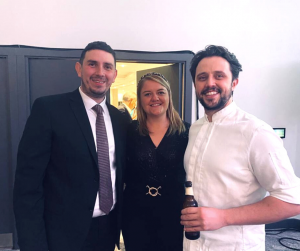
On arrival, in the reception at the Lowry Hotel, Manchester, we were flooded with festive warmth and Christmas decorations – the perfect spot for a team photo! Being greeted by the wonderful Lowry front of house team with G&T’s, a glass of fizz and delicious canapes was a highlight, and the night was yet to begin.

“The evening was my first opportunity since the Covid Pandemic to be back amongst industry colleagues and to raise money for the fabulous Hospitality Action.” ~ Craig Jackson, Head of Permanent Recruitment.

It was a great feeling to be back in a function room, celebrating in-person all things hospitality. What a host Paul Askew was, from the moment we sat down to the moment we left – funny, engaging and always keeping the room laughing.

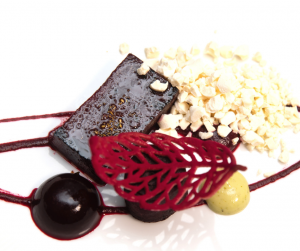
As expected, the food was outstanding and kicking off the four-course dinner was Lisa Goodwin-Allen’s Heirloom beetroots and frozen Black Cow cheese starter. It was great to hear about Lisa’s new role at the Stafford working in collaboration with chef Rogulskij and upcoming Obsession 2022.

“Great evening, very well organised, excellent food! As to be expected! …and Ellis if the cheffing doesn’t work out I can see a career as a music artist.” ~ Angela Byrne, Managing Director.

Ellis Barrie’s entertaining duet with Paul was another highlight for us. Ellis has been cooking, up until recently at the Marram Grass, his award-winning restaurant located in Newborough, Anglesey where he’s really come into his own and wow, what a dish. Ellis served up the fish course of Mussel, Olive oil and Welsh Lamb. It was great to later catch up with Ellis and hear about his future plans, Lerpwl is one to watch!

“It was a fun but also emotional night. The Lamb in Mussel Sauce was definitely my favourite course, and the best part is there was a fantastic amount of money raised for an amazing cause!” ~ Callum Bamber, Commercial Director.

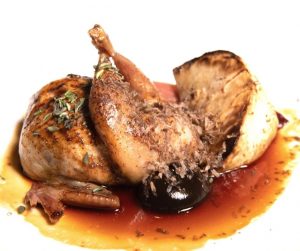
Tom Kerridge’s Q&A was insightful, engaging and hard hitting as he discussed the challenging times we have all faced these past 18 months. The passion Tom has for his businesses and our industry is brilliant; we could have listened to him all night! And what a treat, Tom’s Quail main course was a delight.

“What an honour to be in a room with a great team of chefs, listening to the passion that Tom and Ellis have for our industry was just great. Superb meal from the canapes through to dessert. Seeing money being raised for Hospitality action and hearing of some of the stories really makes you understand how lucky we are.” ~ Jodie Eccles, Head of Hospitality Recruitment.

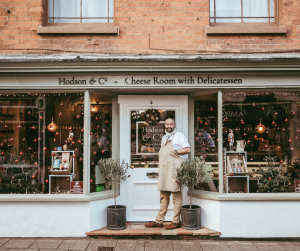
There wasn’t a dry eye around the table when we heard Charlie Hodson’s story, yes Charlie donated the delicious section of cheeses from Hodson and Co Cheese, but he also shared his story with the room. The support Hospitality Action have shown Charlie and so many others during hard times is truly life changing. What a story!

“An amazing evening that both celebrates the hard work and effort of the industry, whilst recognising pressures and strains people endure. The hospitality action charity is doing great work but needs greater support to continue to deliver the services to people in need.” ~ Colin MacIntyre, Director of Client Services

A custard tart completed the evenings dinner, it was delicious and perfectly coupled with a shot of caramel vodka, enjoyed by all. Thank you to Gary Usher for finishing the night on a bang!

“A fantastic evening all around, in aid of a brilliant cause. The food from all the chefs was amazing and it was so nice to see so many people supporting the cause. The atmosphere created by the host Paul Askew was brilliant. Hospitality Action is such an important lifeline for so many people in our amazing industry and I am so glad that we were able to be part of such a special evening.” ~ Mike Llewellyn, Hospitality Recruitment Consultant.

The raffle, silent auction and live auction kept us all entertained throughout the evening – a night at the Ritz, dinner at the Hand & Flowers, a break at the Lowry with spa treatments and Ellis Barrie cooking dinner in your home were just some of the fabulous prizes up for grabs and Ginger did not come away empty handed! Who doesn’t love an auction? Especially when the prizes are to stay and eat at the best hotels and restaurants in the country.

“#WeveGotYou and they certainly did – what an incredible evening that Hospitality Action put on for us lucky folk! Some incredible dishes cooked by the best of the best and a whopping £40,000 raised to support the vital work that HA do. Thanks for having us!” ~ Jack Swarbrick, Hospitality Recruitment Consultant

Thank you, Hospitality Action, for a brilliant night of drinks, entertainment and unmatched food and service at the Lowry! £40,000 raised for such a worthy course – we couldn’t be prouder to be part of this wonderful industry and to support the life-saving work of Hospitality Action.

Watch Poppy’s Story

Social Bite partners with BaxterStorey to help homeless into employment

Social Bite has partnered with BaxterStorey to launch a pioneering new initiative to help revolutionise the access people who have experienced homelessness have to job opportunities across the UK.

Through its new ‘Jobs First’ programme, Social Bite will work directly with BaxterStorey and some of the UK’s biggest employers to help break down the barriers people who have been homeless face on their route to employment.

The initiative, which guarantees living wage employment for each person, will provide wrap around support for both the employer and employee.

Each ‘Jobs First’ employee will be allocated a support worker from Social Bite who will assist them throughout the programme and their employment contract, meeting weekly to offer practical support on bills and forms, as well as emotional guidance and confidence building to adapt to working life.

Social Bite will provide training to each employer to help them appropriately guide the employee while the support worker will help facilitate appraisal processes and employee progress.

As part of the programme, BaxterStorey has committed to employing a 1/3 of all its staff within the Social Bite cafes through the Job First programme, as well as exploring further partnership opportunities to open more Social Bite cafes within the UK.

As measures put in place in response to COVID-19 are wound down, it is feared that more people will experience homelessness with latest statistics released by the Ministry of Housing, Communities and Local Government (MHCLG) showing that many of these measures helped to reduce and prevent homelessness.

Data in London shows that between April and June this year, the number of people sleeping on the streets increased by 25 per cent, making Social Bite’s ‘Jobs First’ initiative even more timely. Firms across the UK are also sounding the alarm over staff shortages, with Britain’s worst labour shortage in decades putting economic recovery from lockdown at risk.


George Watson kickstarted the programme today, taking on his role with hospitality provider BaxterStorey which supplies Royal Bank’s Gogarburn headquarters in Edinburgh where Social Bite recently opened a café.

Josh Littlejohn MBE, CEO and Co-Founder of Social Bite, said: “Social Bite started life nine years ago by offering jobs in a small café to people who had experienced homelessness and over that time we have seen the power of employment to change lives.

“Too often, the response to people experiencing homelessness is to ‘get a job’ – however, it’s not that easy. Proactive employers stepping out of their comfort zone to provide chances for those who would otherwise be excluded and a wraparound support alongside the job are the solutions.

“That’s why the Jobs First programme is so important. We will match people who are excluded from the jobs market with some of the UK’s largest employers.

“The wrap around support we will provide will help both employers and employees enjoy a fruitful working partnership. At a time when the UK is facing a serious labour shortage, we are incredibly proud to be partnering with major employers to deliver a program of scale throughout the UK that can act as a blueprint for how we can provide employment opportunities for homeless and marginalised people.”

Over the past four years, Social Bite has supported 34 people who have experienced homelessness into employment and in total, they aim for one quarter of their workforce to come from a background of homelessness.

Of the 34, many have moved into employment roles with other companies, some into higher education and in many cases, they have developed careers within Social Bite. These learnings have formed the basis for rolling out Jobs First across the UK.

Operations manager, Caroline Bacigalupo at BaxterStorey, said: “Jobs First is a fantastic programme and we’re proud to be working with Social Bite to offer training and employment opportunities to people who were previously homeless.

“We’re all thrilled to welcome George on board and can’t wait to support other Jobs First employees reach their full potential as the programme develops.”

George Watson said: “Social Bite has been like my family for the past seven years. I am really excited to start my job role with BaxterStorey. I am grateful for the Jobs First programme and hope it will help many others into employment.”

Source: hospitalityandcateringnews.com

The staffing nightmare before Christmas

The effects of Brexit and Covid-19 have been felt over the entirety of the hospitality landscape; with European workers no longer able to come back into the UK and the appetite for the sector starting to improve, the sector may face the most grueling festive season yet when it comes to staffing

The food and drink sector is of “vital importance to the UK economy, according to the trade association, UKHospitality, and no more so than the usual (barring Covid-aside) busy festive period. A latest report from the organisation shows that the sector alone contributes an astounding £120bn to the economy and employs around 13% of the country’s workforce. Yet it may be that we see these numbers declining over the Christmas period. “Our workforce usually sits at around 400 to 450 people at this time of year; we’re currently sitting around 350, to 370,” says Mark Vaughan, people’s director at Beds and Bars. UKHospitality suggests the lack of free movement partnered with Covid-19 has caused ‘chronic labour shortages’ throughout the entirety of the food service landscape.

“The ratio of application per vacancy for the hospitality industry has dropped significantly,” confirms Matthew Moore, managing director at CV-Library. The Office for National Statistics also confirms the suspicions, identifying a total of 134,000 vacancies in the ‘accomodation and food service sector’ between July and September 2021 – almost a 30% increase, increase in comparison to 2019. As the sector prepares for what is broadly considered the most profitable time of the year, it is expected that the catering industry will face the hardship of staffing shortages.

According to the jobs website Indeed, as of 1 October 2021, the proportion of job searches being made for seasonal roles was down 27% in comparison to the same time in 2019, and 33% below its 2018 level. The website also showed 10% of job descriptions described the role as ‘urgent’, reflecting just how much catering companies are struggling to attract staff. “If you wanted to hire a bar team member, it would usually take about 24 hours from advert going out to actual recruitment; on average, it’s now taking between seven to 14 days per team member,” says Vaughan.

So why are applications for this sector so low? Moore claims it is a “combination of things”. He says: “There’s no doubt that Brexit has had an impact, particularly if you look at the figures around net migration.” According to UKHospitality, 1.3 million foreign born workers have had to leave the UK, adding “it is unlikely that they will ever return”.

Moore also stresses how a combination of recent issues has kept the appetite for job moves low. “There are general concerns out there, whether it be the energy crisis, supply chain issues, the shortage of HGV drivers; there is a lack of confidence in certain industries, he says”. CV-Library believes that candidates are still taking caution to “sit tight” in their current positions, with reluctance to move into different sectors. Moore goes as far to say that “there has been a decline in younger people moving into work in general” – the most likely demographic of the population to work in hospitality.

In addition, some believe negative perceptions of working conditions in the food service sector continues to prove an obstacle for catering companies. UKHospitality and Beds and Bars suggests that young people tend to build “misconceptions” of the industry being “low-skilled” and “low paid”, when in actuality it can provide a “broad and diverse” career.

“You can work in the bar for a couple of months and within a year work your way into the marketing team, the HR team, or even the intern management running of your own site,” says Vaughan. “ Sometimes 18 to 22 year olds still see hospitality as somewhere you go for beer money while searching for a different career.”

Moore shares this misconception, suggesting that the “volume of job opportunities” available post-pandemic “naturally” dissuades people from applying for positions within the sector.

So what does this mean for catering companies? According to Beds and Bars, the company’s HR department has had to shift its focus solely onto recruitment, restricting attention that needs to be placed elsewhere. Vaughan explains: “In England alone, we had 93 different nationalities working for our company and it’s already dropped to below 50 different nationalities.”. The firm has consequently had to position additional work onto remaining team members and if necessary would consider ‘reducing opening hours’ may need to be imposed if the staffing shortages worsen. However the operator reassures customers that it will not compromise on standards: “If we see standards showing a potential to drop, we will take action to change hours and alter opening times,” says Vaughan.

It may be that smaller catering companies, in comparison to larger ones, lack the facilities to overcome the effects of staffing shortages. “A lot of the smaller companies are feeling the ‘burn’ rather than the large companies at the moment because we have got a little bit of ‘cushion’ behind us and we’re able to sustain ourselves during this period,” says Vaughan.

“If you look across hospitality as a whole, it doesn’t tend to be a British led job market, especially for the more junior roles – at the moment, we’re asking British people to do jobs that British people traditionally wouldn’t do. The question that now needs answering is, how can the industry incentivise new and remaining staff?

Beds and Bars has implemented a novel scheme for new and remaining employees, set to run throughout the duration of the Christmas period. “From 1 November to the 31 of December, including New Year’s Eve itself, all team members automatically receive a 5% potential bonus from the company,” says Vaughan. He adds: “on top of that, there is between a 10% to 25% bonus based on beating year-on-year targets,” beginning the year before Covid-19. According to Moore, “it’s about showing that culturally, you care for your staff – that you have their long term interests at heart.”

The firm has also disclosed this is specifically for the Christmas period in order to ‘be transparent’ with applicants – “that way you won’t see from our company a mass exit or mass group of people who ‘conveniently’ failed their probation periods,” says Vaughan. The hospitality operator suggested upping wages for the foreseeable future is ‘misleading’ as come January, companies will no longer need the high number of staff recruited in the winter season: “Post Christmas, most hospitality workforces are cut by about 30 to 35%,” Vaughan discloses.

Does the current climate look to change any time soon? According to Moore, “it is difficult to say conclusively.” He adds: “I can’t see anything that will significantly change the pattern that we’re seeing of consistently low applications per job throughout the year – and it’s the case in most industries – there’s no one thing that’s going to change that overnight.”

It is expected that the catering industry will feel unsettled in the build up to Christmas. With Brexit making travel “less accessible” and Covid-19 forcing catering companies to “stretch out staff,” it is quite likely that the festive season will “exacerbate” the problem, and even more so for smaller catering companies, according to Moore. However, CV-Library reassures that “European workers will return”, with companies like Beds and Bars confident the hospitality operator, as well as larger catering companies, will always attract EU workers because they are “safe and secure companies”.

Furthermore, investments in new schemes such as temporary recruitment incentives, may just encourage applicants to choose hospitality over alternative sectors. The company said it is also in the process of launching an additional scheme with the intent to educate people of the career possibilities within hospitality. It seems staffing shortages within the sector have not solely come about by temporary events such as Covid-19 and Brexit; a long standing negative perception of hospitality has repeatedly hindered the appetite to work in the industry. Perhaps if these long-standing barriers facing the sector are also addressed the severity of the staffing nightmare may come to an end.

Source: cateringtoday.co.uk